Book view
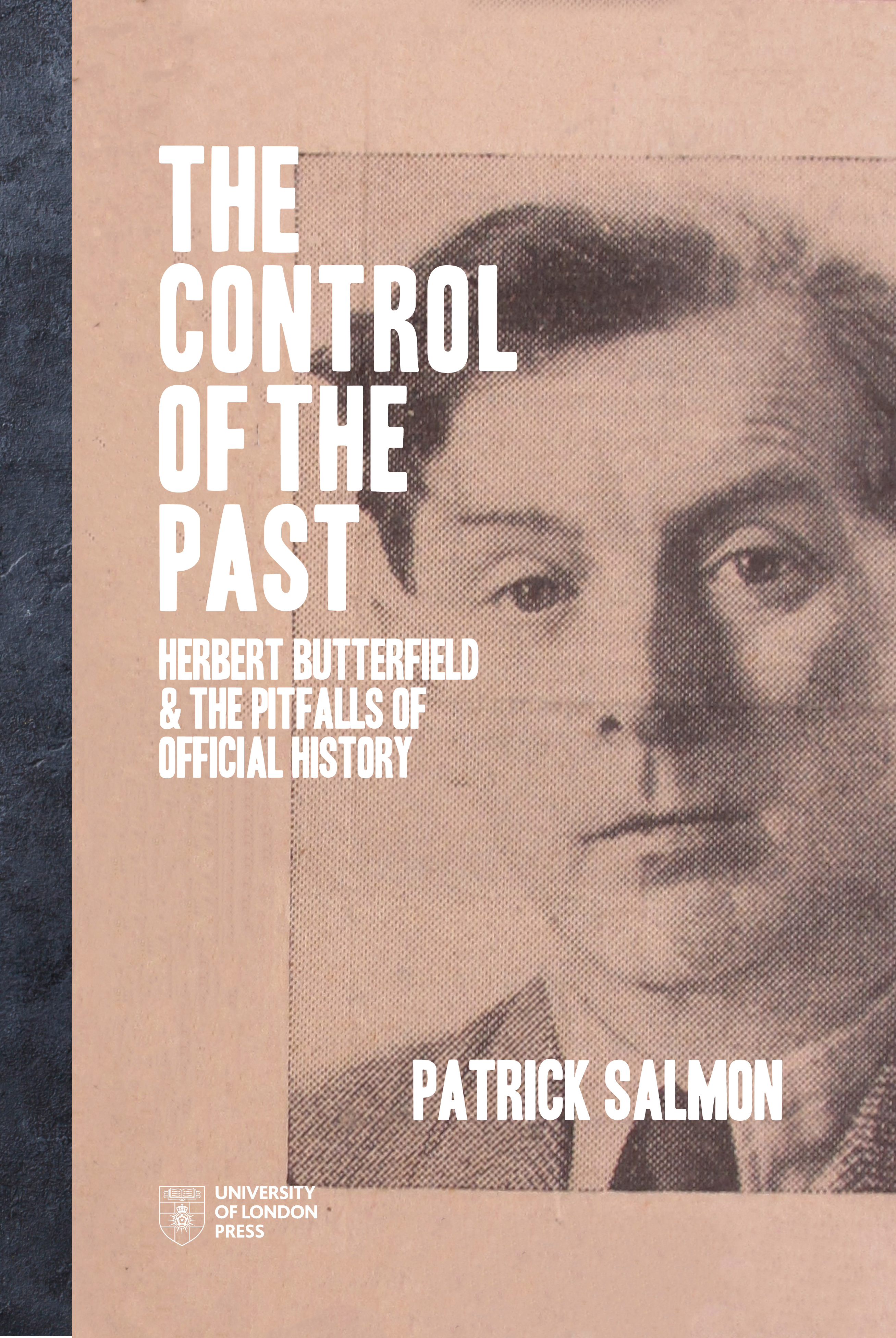
The Control of the Past
Herbert Butterfield and the Pitfalls of Official History
Book information
- Publisher
- University of London Press
- Publication
- Published 6 December 2021
- Place
- London, GB
- Catalogue record
- View in the catalogue
Abstract
Herbert Butterfield (1900–1979) was one of the earliest and strongest critics of what he saw as the British government’s attempts to control the past through the writing of so-called, ‘official histories’. His famous diatribe against the 'pitfalls' of government-mandated history first appeared in 1949, at a time when the British government was engaged in publishing official histories and diplomatic documents on an unprecedented scale following the Second World War. But why was Butterfield so hostile to official history, and why do his views still matter today?
Written by one of the few historians employed by the British government, this important book details how successive governments have applied a selective approach to the past in order to tell or re-tell Britain’s national history, with implications for the future.
Providing a unique overview of the main trends of official history in Britain since the Second World War, the book details how Butterfield came to suspect that the British government was trying to suppress vital documents revealing the Duke of Windsor’s dealings with Nazi Germany. This seemed to confirm his long-held belief that all governments would seek to manipulate history if they could, and conceal the truth if they could not. At the beginning of the 21st century, official history is still being written and the book concludes with an insider’s perspective on the many issues it faces today– on freedom of information, social media and reengaging with our nation’s colonial legacy. Governments have recently been given many reminders that history matters, and it is Herbert Butterfield above all who reminds us that we must remain vigilant in monitoring how they respond to the challenge.
Where its authors and editors are based
Countries of the institutions the book's authors, editors and chapter authors were affiliated to when it was published.
- AUTHORS / EDITORS
- CITATIONS Phase 2
- USAGE Phase 3
No affiliations with a known country in these years yet.
About this data
These figures cover 1 work. Each value comes from the most trusted source that has it; a correction made by OJC or OBC staff outranks every source.
| Source | Confidence | Works |
|---|---|---|
| Thoth | 90 / 100 | 1 |
| Works with a publication date | 100% |
|---|---|
| Works with a DOI | 100% |
| Works with a funder recorded | 0% |
| Authors with an affiliation | 0% |
Countries come from the institution each author was affiliated to when they published, as recorded in ROR. A country is never guessed, so authors without a matched institution are not counted on the maps.
Funders come from OpenAlex for articles and Thoth for books, where publishers recorded them. Most works record none, so a funder's figures show what is recorded, not everything it funded.
Chapters count as works: their authors and editors, and the countries of their institutions, are in every figure where Thoth records an affiliation for them.
Citations (Phase 2) and usage (Phase 3) are not collected yet.