Book information
- Publisher
- University of London Press
- Publication
- Published 11 January 2024
- Place
- London, GB
- Catalogue record
- View in the catalogue
Abstract
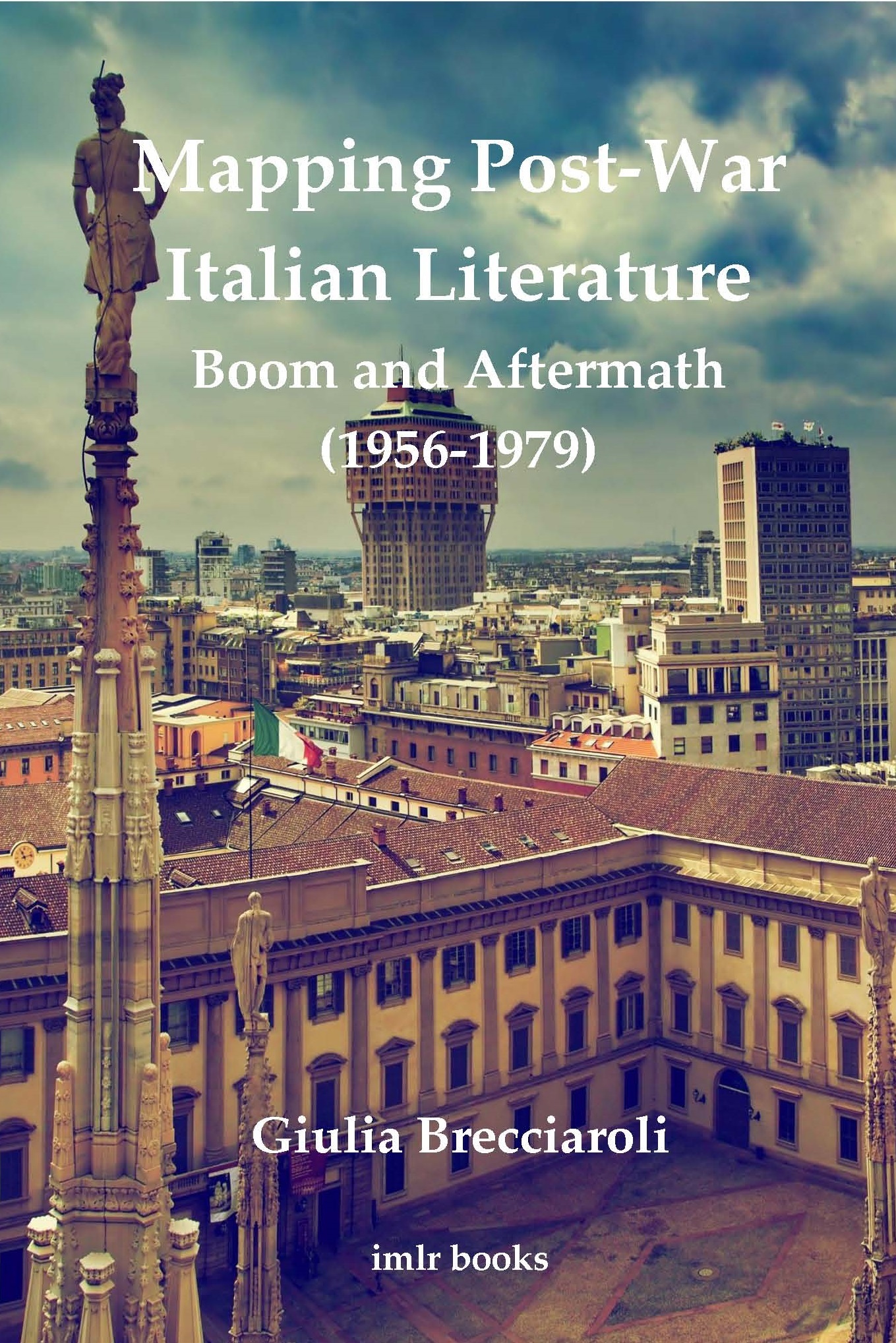
In the aftermath of the reconstruction period immediately after the Second World War, Italy experienced an unprecedented and unexpected phase of economic development, which transformed it from a traditionally agrarian and impoverished country into one of Europe’s most industrialized nations. The idea, treasured to this day by many Italians, of this period as a sort of ‘golden age’ has increasingly been called into question by historical research that has delved into the deeper, persistent contradictions of Italian society at the time. Mapping Post-War Italian Literature embraces the boom years and their legacy, exploring the long-lasting impact of post-war Italy’s urbanization and modernization on the imagination of Italian writers. It does so by looking at how socio-spatial transformations affecting the main industrial cities of the North – Milan and Turin – as well as the provinces (a space generally deemed ‘peripheral’) and the national landscape have been conceptualized in contemporary novels and travel accounts. The selected texts cross genre boundaries and reflect an array of authorial positions, giving a compelling and multifaceted account of the post-war historical transition.
Where its authors and editors are based
Countries of the institutions the book's authors, editors and chapter authors were affiliated to when it was published.
- AUTHORS / EDITORS
- CITATIONS Phase 2
- USAGE Phase 3
No affiliations with a known country in these years yet.
About this data
These figures cover 1 work. Each value comes from the most trusted source that has it; a correction made by OJC or OBC staff outranks every source.
| Source | Confidence | Works |
|---|---|---|
| Thoth | 90 / 100 | 1 |
| Works with a publication date | 100% |
|---|---|
| Works with a DOI | 100% |
| Works with a funder recorded | 0% |
| Authors with an affiliation | 0% |
Countries come from the institution each author was affiliated to when they published, as recorded in ROR. A country is never guessed, so authors without a matched institution are not counted on the maps.
Funders come from OpenAlex for articles and Thoth for books, where publishers recorded them. Most works record none, so a funder's figures show what is recorded, not everything it funded.
Chapters count as works: their authors and editors, and the countries of their institutions, are in every figure where Thoth records an affiliation for them.
Citations (Phase 2) and usage (Phase 3) are not collected yet.