Book view
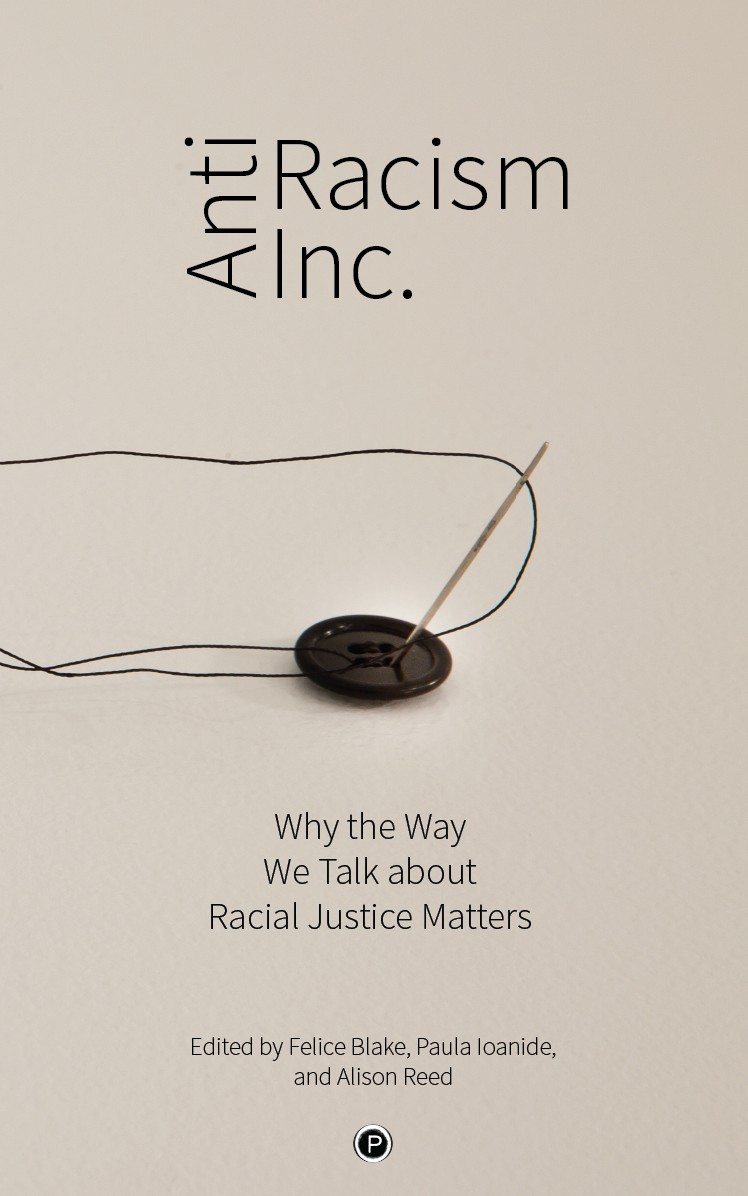
Antiracism Inc.
Why the Way We Talk about Racial Justice Matters
Edited by Felice Blake, Paula Ioanide, Alison Reed
Book information
- Publisher
- punctum books
- Publication
- Published 25 April 2019
- Place
- Earth, Milky Way
- Catalogue record
- View in the catalogue
Abstract
Antiracism Inc. traces the ways people along the political spectrum appropriate, incorporate, and neutralize antiracist discourses to perpetuate injustice. It also examines the ways organizers continue to struggle for racial justice in the context of such appropriations. Antiracism Inc. reveals how antiracist claims can be used to propagate racism, and what we can do about it.
While related to colorblind, multicultural, and diversity discourses, the appropriation of antiracist rhetoric as a strategy for advancing neoliberal and neoconservative agendas is a unique phenomenon that requires careful interrogation and analysis. Those who co-opt antiracist language and practice do not necessarily deny racial difference, biases, or inequalities. Instead, by performing themselves conservatively as non-racists or liberally as ‘authentic’ antiracists, they purport to be aligned with racial justice even while advancing the logics and practices of systemic racism.
Antiracism Inc. considers new ways of struggling toward racial justice in a world that constantly steals and misuses radical ideas and practices. The critical essays, interviews, and poetry collected here focus on people and methods that do not seek inclusion in the hierarchical order of gendered racial capitalism. Rather, they focus on aggrieved peoples who have always had to negotiate state violence and cultural erasure, but who also work to build the worlds they envision. These collectivities seek to transform social structures and establish a new social warrant guided by what W.E.B. Du Bois called “abolition democracy,” a way of being and thinking that privileges people, mutual interdependence, and ecological harmony over individualist self-aggrandizement and profits. Further, these aggrieved collectivities reshape social relations away from the violence and alienation inherent to gendered racial capitalism, and towards the well-being of the commons. Antiracism Inc. articulates methodologies that strive toward freedom dreams without imposing monolithic or authoritative definitions of resistance. Because power seeks to neutralize revolutionary action through incorporation as much as through elimination, these freedom dreams, as well as the language used to articulate them, are constantly transformed through the critical and creative interventions stemming from the active engagement in liberation struggles.
In addition to critical essays by Felice Blake (“How Does Black Cultural Criticism ‘Work’ in the Age of Antiracist Incorporation?”), Kevin Fellezs (“Nahenahe [Soft, Sweet, Melodious], the Sound of Kanaka Maoli [Native Hawaiian] Refusal”), Daniel Martinez HoSang (“A Wider Type of Freedom”), Paula Ioanide (“Defensive Appropriations”), George Lipsitz (“The Logic of ‘Illogical’ Opposition: Tools and Tactics for Tough Times”), Alison Reed (“Gentrifying Disciplines: The Institutional Management of Trauma and Creative Dissent”), Phia S. Salter + Glenn Adams (“Provisional Strategies for Decolonizing Consciousness”), and Barbara Tomlinson (“Wicked Problems and Intersectionality Telephone”), the volume also includes poetry by Dubian Ade, Jari Bradley, Dahlak Brathwaite, Corinne Contreras, Ebony P. Donnley, Colin Masashi Ehara, David Scott (YDS), Daniel Hershel Silber-Baker, and Sophia Terazawa, as well as interviews with Diana Zuñiga (CURB, Californians United for a Responsible Budget) and with Gaby Hernandez and Marissa Garcia (PODER, People Organizing for the Defense and Equal Rights of Santa Barbara Youth).
Chapters
| Chapter | Author | Institution at publication |
|---|---|---|
| A Wider Type of Freedom | Daniel Martinez HoSang | Yale University |
| After My Uncle Elbowed a Soldier in the Face on the Beach of Pulau Bidong | Sophia Terazawa | Virginia Tech |
| Akira | Colin Masashi Ehara | Universidade São Francisco |
| Antiracism Incorporated | Felice Blake, Paula Ioanide | University of California, Santa Barbara; Ithaca College |
| Antiracism Works | Felice Blake | University of California, Santa Barbara |
| Backmatter | Felice Blake, Paula Ioanide, Alison Reed | University of California, Santa Barbara; Ithaca College; Old Dominion University |
| Contested Language of Freedom | Daniel Hershel Silber-Baker | |
| Defensive Appropriations | Paula Ioanide | Ithaca College |
| Frontmatter | Felice Blake, Paula Ioanide, Alison Reed | University of California, Santa Barbara; Ithaca College; Old Dominion University |
| Gangland Wonderama | YDS | |
| Gentrifying Disciplines | Alison Reed | Old Dominion University |
| graffiti hanging gently in an art museum | Daniel Hershel Silber-Baker | |
| How Does Cultural Criticism “Work” in the Age of Antiracist Incorporation? | Felice Blake | University of California, Santa Barbara |
| If a tree falls in the forest… | Daniel Hershel Silber-Baker | |
| Nahenahe | Kevin Fellezs | Columbia University |
| November 5, 2016 | Corinne Contreras | |
| Our City, Our Solutions | Alison Reed | Old Dominion University |
| Pleasure as an Imperative (for Black Femmes) in 5 Acts | Ebony P. Donnley | |
| Poetic Knowledge | Alison Reed | Old Dominion University |
| Provisional Strategies for Decolonizing Consciousness | Phia S. Salter, Glenn Adams | Davidson College; University of Kansas |
| The Good One | Dahlak Brathwaite | |
| The Logic of “Illogical” Opposition | George Lipsitz | University of California, Santa Barbara |
| the white supremacy waiting game | Daniel Hershel Silber-Baker | |
| This Is Just to Say | Dubian Ade | Ithaca College |
| Trump 2016 | Jari Bradley | University of Houston |
| Wicked Problems and Intersectionality Telephone | Barbara Tomlinson | University of California, Santa Barbara |
Where its authors and editors are based
Countries of the institutions the book's authors, editors and chapter authors were affiliated to when it was published.
- AUTHORS / EDITORS
- CITATIONS Phase 2
- USAGE Phase 3
| Country | Authors / editors |
|---|---|
| United States | 12 |
| Brazil | 1 |
About this data
These figures cover 27 works. Each value comes from the most trusted source that has it; a correction made by OJC or OBC staff outranks every source.
| Source | Confidence | Works |
|---|---|---|
| Thoth | 90 / 100 | 27 |
| Works with a publication date | 100% |
|---|---|
| Works with a DOI | 4% |
| Works with a funder recorded | 0% |
| Authors with an affiliation | 77% |
| Affiliations matched to an institution (ROR) | 100% |
| Affiliations with a country | 100% |
Countries come from the institution each author was affiliated to when they published, as recorded in ROR. A country is never guessed, so authors without a matched institution are not counted on the maps.
Funders come from OpenAlex for articles and Thoth for books, where publishers recorded them. Most works record none, so a funder's figures show what is recorded, not everything it funded.
Chapters count as works: their authors and editors, and the countries of their institutions, are in every figure where Thoth records an affiliation for them.
Citations (Phase 2) and usage (Phase 3) are not collected yet.