Book information
- Publisher
- punctum books
- Publication
- Published 5 November 2020
- Place
- Earth, Milky Way
- Catalogue record
- View in the catalogue
Abstract
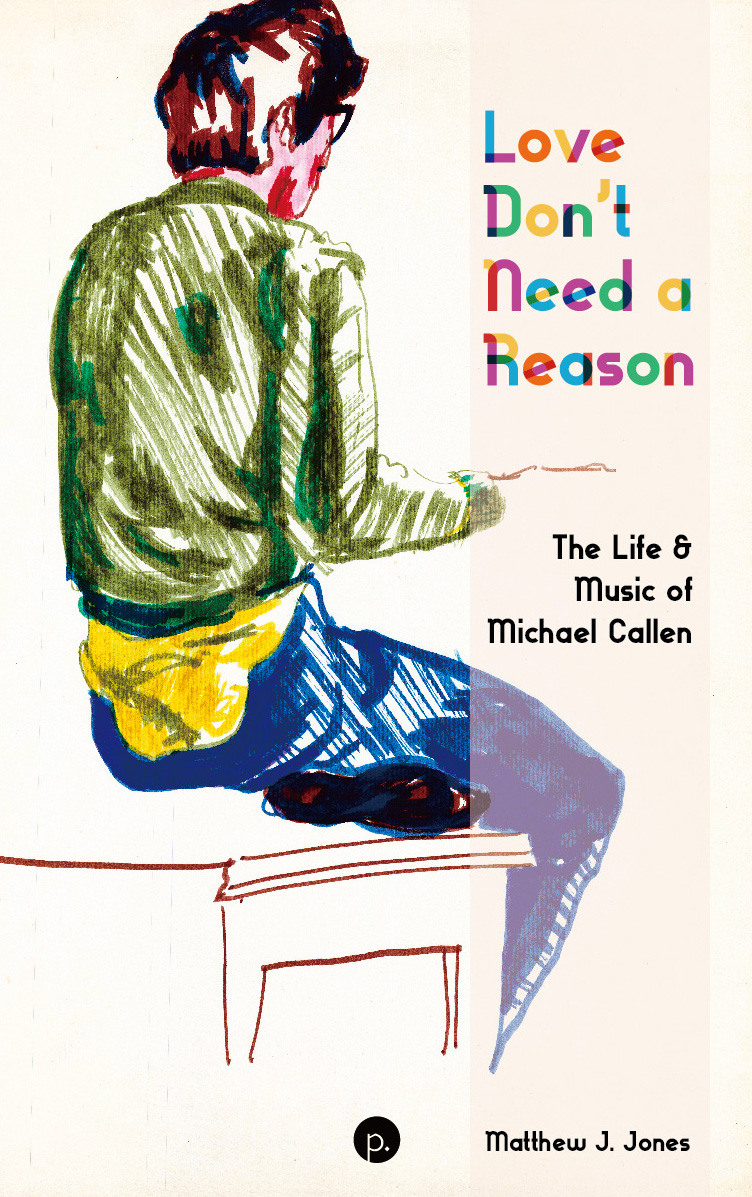
From a stage erected in front of the US Capitol, on April 25, 1993, Michael Callen surveyed the throng: an estimated one million people stretched across the National Mall in the largest public demonstration of queer political solidarity in history. “What a sight,” he told the crowd, his earnest Midwestern twang reverberating through loudspeakers. “You’re a sight for sore eyes. Being gay is the greatest gift I have ever been given, and I don’t care who knows about it.” He then launched into a gorgeous rendition of “Love Don’t Need a Reason,” the AIDS anthem he composed with Marsha Malamet and the late Peter Allen. As Callen finished singing, people stood cheering and flashing the familiar American Sign Language symbol for “I Love You.” For they knew the song’s sentiment rang true for Callen, who had recently announced his retirement from music and activism after a living for more than a decade with what was then called “full-blown AIDS.” After the March on Washington, Callen returned to his recently adopted West Coast home, Los Angeles. In the ensuing months, his health rapidly declined, and on 27 December 1993, Callen died of AIDS-related pulmonary Kaposi’s sarcoma.
Love Don’t Need a Reason focuses on Callen’s most important and lasting legacy: his music. A witness to the overlooked last years of Gay Liberation and a major figure in the early years of the AIDS crisis, Michael Callen chronicled these experiences in song. A community organizer, activist, author, and architect of the AIDS self-empowerment movement, he literally changed the way we have sex in an epidemic when he co-authored one of the first safe-sex guides in 1983. A gifted singer, songwriter, and performer, he also made gay music for gay people and used music to educate and empower people with AIDS. Listening again to his music allows us to hear the shifting dynamics of American families, changing notions of masculinity, gay migration to urban areas, the sexual politics of Gay Liberation, and HIV/AIDS activism. Using extensive archival materials and newly-conducted oral history interviews with Callen’s friends, family, and fellow musicians, Matthew J. Jones reintroduces Callen to the history of LGBTQIA+ music and places Callen’s music at the center of his important activist work.
Where its authors and editors are based
Countries of the institutions the book's authors, editors and chapter authors were affiliated to when it was published.
- AUTHORS / EDITORS
- CITATIONS Phase 2
- USAGE Phase 3
| Country | Authors / editors |
|---|---|
| United States | 1 |
About this data
These figures cover 1 work. Each value comes from the most trusted source that has it; a correction made by OJC or OBC staff outranks every source.
| Source | Confidence | Works |
|---|---|---|
| Thoth | 90 / 100 | 1 |
| Works with a publication date | 100% |
|---|---|
| Works with a DOI | 100% |
| Works with a funder recorded | 0% |
| Authors with an affiliation | 100% |
| Affiliations matched to an institution (ROR) | 100% |
| Affiliations with a country | 100% |
Countries come from the institution each author was affiliated to when they published, as recorded in ROR. A country is never guessed, so authors without a matched institution are not counted on the maps.
Funders come from OpenAlex for articles and Thoth for books, where publishers recorded them. Most works record none, so a funder's figures show what is recorded, not everything it funded.
Chapters count as works: their authors and editors, and the countries of their institutions, are in every figure where Thoth records an affiliation for them.
Citations (Phase 2) and usage (Phase 3) are not collected yet.