Book information
- Publisher
- punctum books
- Publication
- Published 16 January 2015
- Place
- Brooklyn, NY
- Catalogue record
- View in the catalogue
Abstract
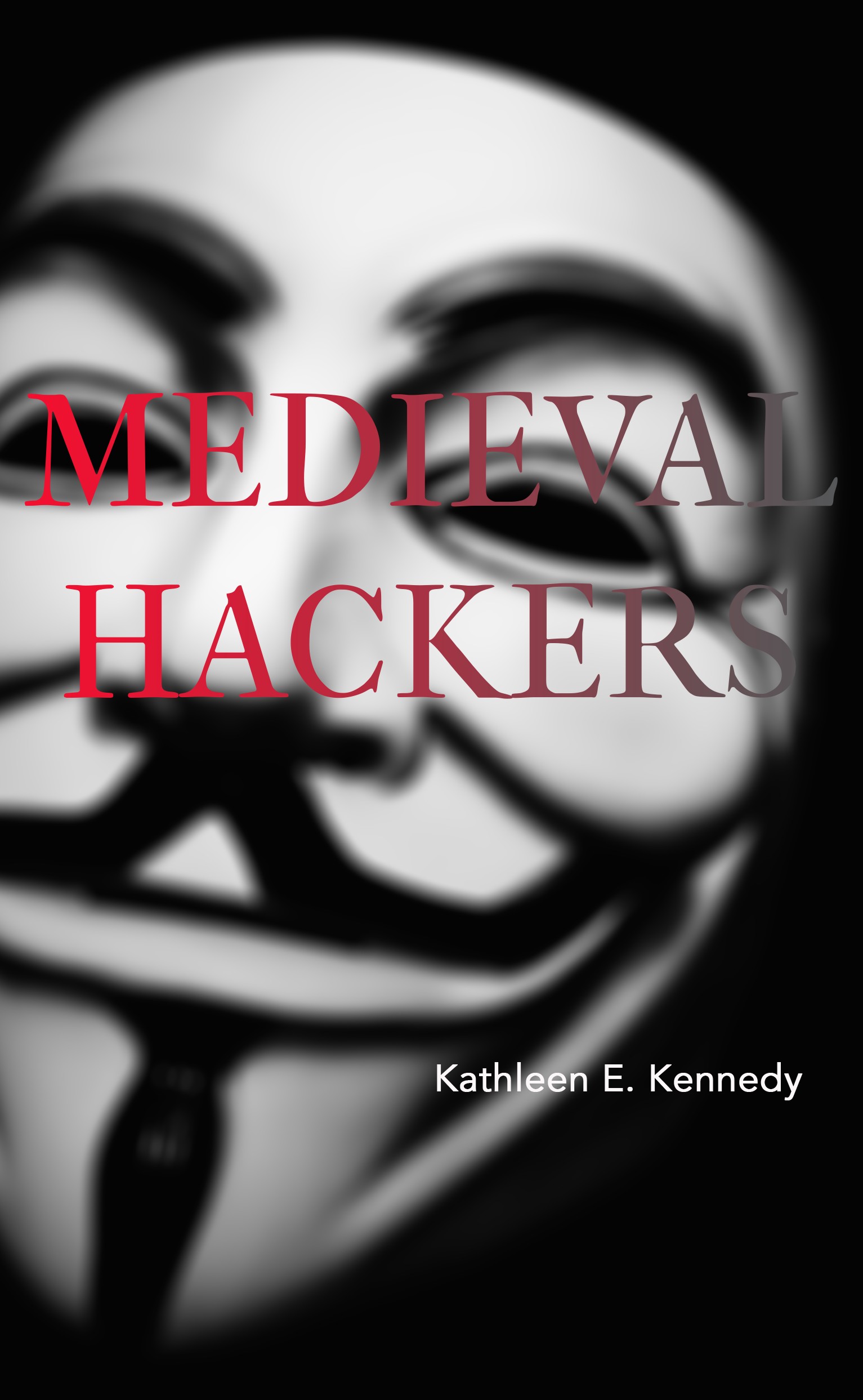
Medieval Hackers calls attention to the use of certain vocabulary terms in the Middle Ages and today: commonness, openness, and freedom. Today we associate this language with computer hackers, some of whom believe that information, from literature to the code that makes up computer programs, should be much more accessible to the general public than it is. In the medieval past these same terms were used by translators of censored texts, including the bible. Only at times in history when texts of enormous cultural importance were kept out of circulation, including our own time, does this vocabulary emerge. Using sources from Anonymous’s Fawkes mask to William Tyndale’s Bible prefaces, Medieval Hackers demonstrates why we should watch for this language when it turns up in our media today. This is important work in media archaeology, for as Kennedy writes in this book, the “effluorescence of intellectual piracy” in our current moment of political and technological revolutions “cannot help but draw us to look back and see that the enforcement of intellectual property in the face of traditional information culture has occurred before….We have seen that despite the radically different stakes involved, in the late Middle Ages, law texts traced the same trajectory as religious texts. In the end, perhaps religious texts serve as cultural bellwethers for the health of the information commons in all areas. As unlikely as it might seem, we might consider seriously the import of an animatronic [John] Wyclif, gesturing us to follow him on a (potentially doomed) quest to preserve the information commons.”
Where its authors and editors are based
Countries of the institutions the book's authors, editors and chapter authors were affiliated to when it was published.
- AUTHORS / EDITORS
- CITATIONS Phase 2
- USAGE Phase 3
| Country | Authors / editors |
|---|---|
| United States | 1 |
About this data
These figures cover 1 work. Each value comes from the most trusted source that has it; a correction made by OJC or OBC staff outranks every source.
| Source | Confidence | Works |
|---|---|---|
| Thoth | 90 / 100 | 1 |
| Works with a publication date | 100% |
|---|---|
| Works with a DOI | 100% |
| Works with a funder recorded | 0% |
| Authors with an affiliation | 100% |
| Affiliations matched to an institution (ROR) | 100% |
| Affiliations with a country | 100% |
Countries come from the institution each author was affiliated to when they published, as recorded in ROR. A country is never guessed, so authors without a matched institution are not counted on the maps.
Funders come from OpenAlex for articles and Thoth for books, where publishers recorded them. Most works record none, so a funder's figures show what is recorded, not everything it funded.
Chapters count as works: their authors and editors, and the countries of their institutions, are in every figure where Thoth records an affiliation for them.
Citations (Phase 2) and usage (Phase 3) are not collected yet.