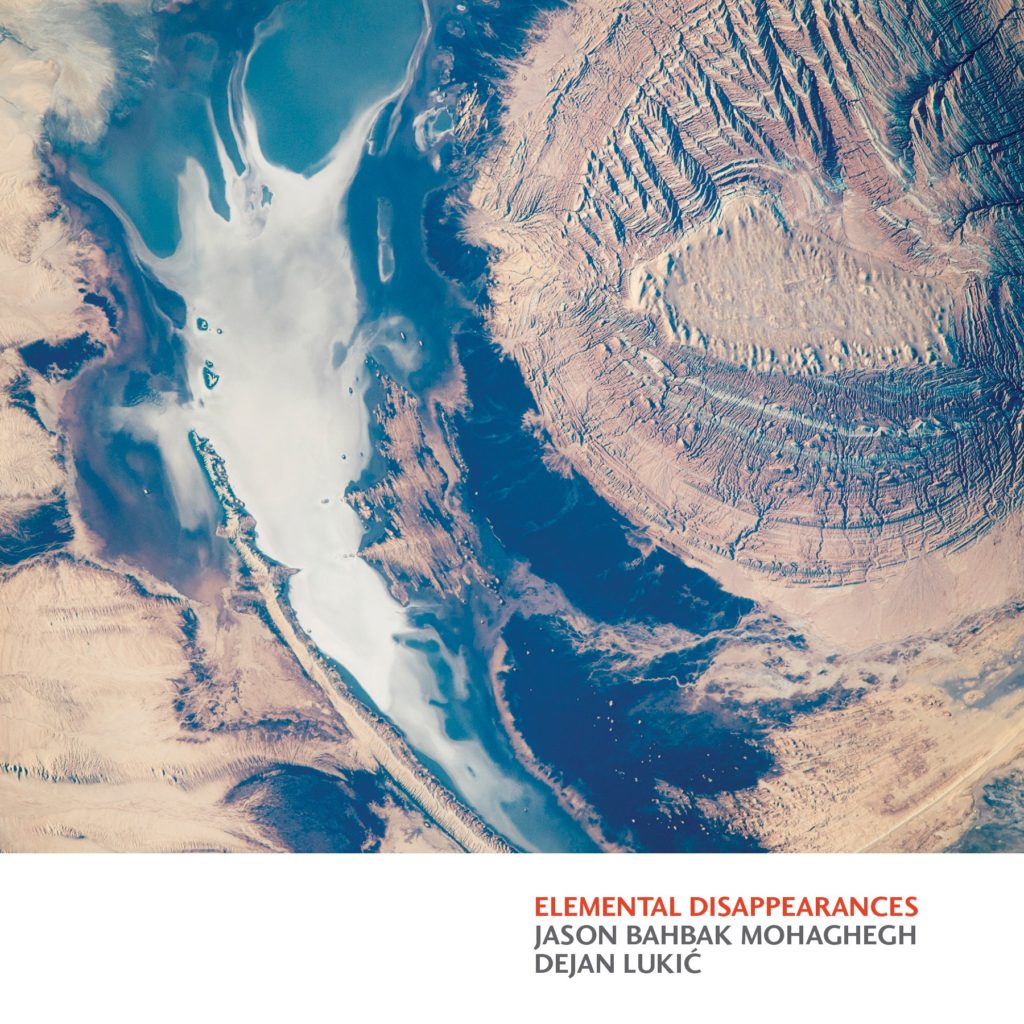
Book information
- Publisher
- punctum books
- Publication
- Published 28 November 2016
- Place
- Earth, Milky Way
- Catalogue record
- View in the catalogue
Abstract
The marauder’s fragment … positions itself in the prism between futility, annihilation, and playful diversion. And still, it is here that we find the last chance for a world.
The things sought after here are apparitional: they appear and disappear at will; they perfect the art of materialization and vanishing. Such is the nature of living dangerously, and with it the short duration of enchantment. This collection tracks provocative ideas, artifacts, and phenomena rising and fading across different territories of the contemporary world. Through a constellation of powerful thought-images, the authors uncover spaces of an ephemeral and fugitive nature in order to generate a fractal vision of our time and beyond.
A former communist prison island in the Adriatic Sea, now abandoned and overgrown with wild plants; the stone garden of a deaf Iranian peasant who dances ecstatically among his geological formations; a Belgian sculptor who combines wax and flesh to depict human and animal forms in states of half-manifestation, incompletion (missing limbs), or branching (morphing into other organisms); a cultural movement in Brazil that takes the discarded debris of urban centers and transforms their splintered wood pieces into massive labyrinths and underground caverns; a blacksmith poet in Afghanistan who alternates between tasks of hammering metal and writing lyrical verses amidst the smoke-clouds of his forge; a Cuban writer whose delirious fixation with the sea compels him to invent a language of pure untimeliness.
There are countless sites of disturbance within the postmodern landscape, and yet far too often these disruptive “scenes” remain untheorized and misaligned, treated as random deviations and thus afforded no surpassing consequence or philosophical complexity. Such micro-trajectories necessitate an archive and conceptual matrix that will steal them from their false obscurity and decipher them instead as the passcodes to an imminent global turn. For this, one must return to the amorphous outlook of “the marauder” or “the wanderer.” This book, then, aims to devise an ever-expanding configuration of radical outsides: elemental fronts that lead to unforeseen principles; alternative profiles of experience (intense becomings); incendiary, ominous, or vitalistic signs in circulation across the epochal horizon.
Where its authors and editors are based
Countries of the institutions the book's authors, editors and chapter authors were affiliated to when it was published.
- AUTHORS / EDITORS
- CITATIONS Phase 2
- USAGE Phase 3
| Country | Authors / editors |
|---|---|
| United States | 2 |
About this data
These figures cover 1 work. Each value comes from the most trusted source that has it; a correction made by OJC or OBC staff outranks every source.
| Source | Confidence | Works |
|---|---|---|
| Thoth | 90 / 100 | 1 |
| Works with a publication date | 100% |
|---|---|
| Works with a DOI | 100% |
| Works with a funder recorded | 0% |
| Authors with an affiliation | 100% |
| Affiliations matched to an institution (ROR) | 100% |
| Affiliations with a country | 100% |
Countries come from the institution each author was affiliated to when they published, as recorded in ROR. A country is never guessed, so authors without a matched institution are not counted on the maps.
Funders come from OpenAlex for articles and Thoth for books, where publishers recorded them. Most works record none, so a funder's figures show what is recorded, not everything it funded.
Chapters count as works: their authors and editors, and the countries of their institutions, are in every figure where Thoth records an affiliation for them.
Citations (Phase 2) and usage (Phase 3) are not collected yet.