Book information
- Publisher
- punctum books
- Publication
- Published 13 February 2019
- Place
- Earth, Milky Way
- Catalogue record
- View in the catalogue
Abstract
In an increasingly technologized and connected world, it seems as if noise must be increasing. Noise, however, is a complicated term with a complicated history. Noise can be traced through structures of power, theories of knowledge, communication, and scientific practice, as well as through questions of art, sound, and music. Thus, rather than assume that it must be increasing, this work has focused on better understanding the various ways that noise is defined, what that noise can do, and how we can use noise as a strategically political tactic.
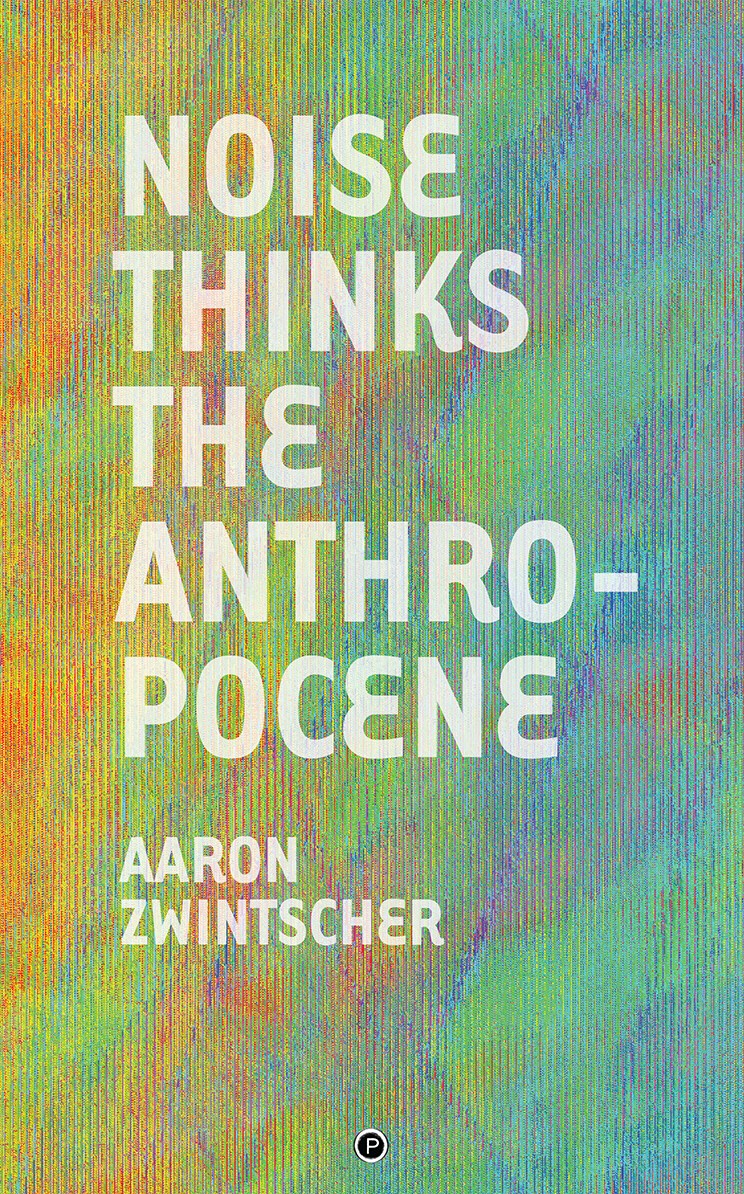
Noise Thinks the Anthropocene is a textual experiment in noise poetics that uses the growing body of research into noise as source material. It is an experiment in that it results from indeterminate means, alternative grammar, and experimental thinking. The outcome was not predetermined. It uses noise to explain, elucidate, and evoke (akin to other poetic forms) within the textual milieu in a manner that seeks to be less determinate and more improvisational than conventional writing. Noise Thinks the Anthropocene argues that noise poetics is a necessary form for addressing political inequality, coexistence with the (nonhuman) other, the ecological crisis, and sustainability because it approaches these issues as a system of interconnected fragments and excesses and thus has the potential to reach or envision solutions in novel ways.
Where its authors and editors are based
Countries of the institutions the book's authors, editors and chapter authors were affiliated to when it was published.
- AUTHORS / EDITORS
- CITATIONS Phase 2
- USAGE Phase 3
| Country | Authors / editors |
|---|---|
| United States | 1 |
About this data
These figures cover 1 work. Each value comes from the most trusted source that has it; a correction made by OJC or OBC staff outranks every source.
| Source | Confidence | Works |
|---|---|---|
| Thoth | 90 / 100 | 1 |
| Works with a publication date | 100% |
|---|---|
| Works with a DOI | 100% |
| Works with a funder recorded | 0% |
| Authors with an affiliation | 100% |
| Affiliations matched to an institution (ROR) | 100% |
| Affiliations with a country | 100% |
Countries come from the institution each author was affiliated to when they published, as recorded in ROR. A country is never guessed, so authors without a matched institution are not counted on the maps.
Funders come from OpenAlex for articles and Thoth for books, where publishers recorded them. Most works record none, so a funder's figures show what is recorded, not everything it funded.
Chapters count as works: their authors and editors, and the countries of their institutions, are in every figure where Thoth records an affiliation for them.
Citations (Phase 2) and usage (Phase 3) are not collected yet.