Book information
- Publisher
- punctum books
- Publication
- Published 27 October 2016
- Place
- Earth, Milky Way
- Catalogue record
- View in the catalogue
Abstract
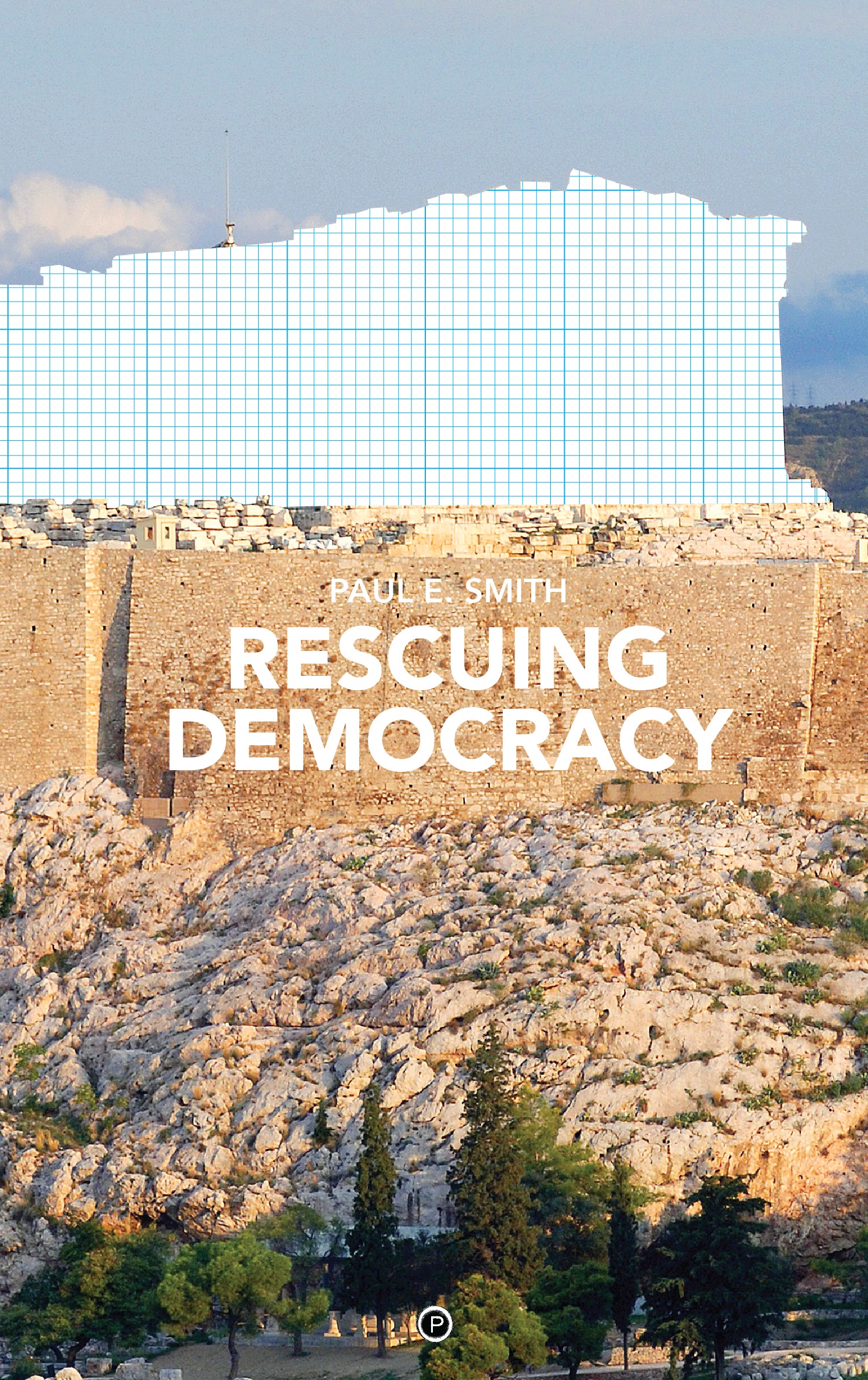
This book proposes a new institution — the "People’s Forum" — to enable democratic governments to effectively address long-running issues like global warming and inequality. It would help citizens decide what strategic problems their government must fix, especially where this requires them to suffer some inconvenience or cost.
The People’s Forum is first based on a new diagnosis of government failure in democracies. The book tests its own analyses of government failure by seeing whether these might help us to explain the failures of particular democracies to address (and in some cases, to even recognize) several crucial environmental problems. The essential features of a new design for democracy are described and then compared with those of previous institutional designs that were also intended to improve the quality of democratic government. In that comparison, the People’s Forum turns out to be not only the most effective design for developing and implementing competent policy, but also the easiest to establish and run. The latter advantage is crucial as there has been no success in getting previous designs into actual trial practice. It is hoped that this book may inspire a small group to raise the money to set up and run the People’s Forum. Then, as citizens see it operating and engage with it, they may come to regard the new Forum as essential in helping them to deliberate long-running issues and to get their resulting initiatives implemented by government. Smith also discusses how the People’s Forum must be managed and how groups with different political ideologies may react to it.
An Afterword sets out the method by which this design was produced, to help those who might want to devise an institution themselves. The new concepts in environmental science that the book develops to test its diagnosis are applied in an Appendix to outline crucial options for the future of Tasmania. Similar options apply to many countries, states and provinces. As indicated above, those choices are currently beyond the capacity of democratic governments to address and in some cases, even to recognize. But the People’s Forum may lift them out of that morass.
Where its authors and editors are based
Countries of the institutions the book's authors, editors and chapter authors were affiliated to when it was published.
- AUTHORS / EDITORS
- CITATIONS Phase 2
- USAGE Phase 3
| Country | Authors / editors |
|---|---|
| Australia | 1 |
About this data
These figures cover 1 work. Each value comes from the most trusted source that has it; a correction made by OJC or OBC staff outranks every source.
| Source | Confidence | Works |
|---|---|---|
| Thoth | 90 / 100 | 1 |
| Works with a publication date | 100% |
|---|---|
| Works with a DOI | 100% |
| Works with a funder recorded | 0% |
| Authors with an affiliation | 100% |
| Affiliations matched to an institution (ROR) | 100% |
| Affiliations with a country | 100% |
Countries come from the institution each author was affiliated to when they published, as recorded in ROR. A country is never guessed, so authors without a matched institution are not counted on the maps.
Funders come from OpenAlex for articles and Thoth for books, where publishers recorded them. Most works record none, so a funder's figures show what is recorded, not everything it funded.
Chapters count as works: their authors and editors, and the countries of their institutions, are in every figure where Thoth records an affiliation for them.
Citations (Phase 2) and usage (Phase 3) are not collected yet.