Book view
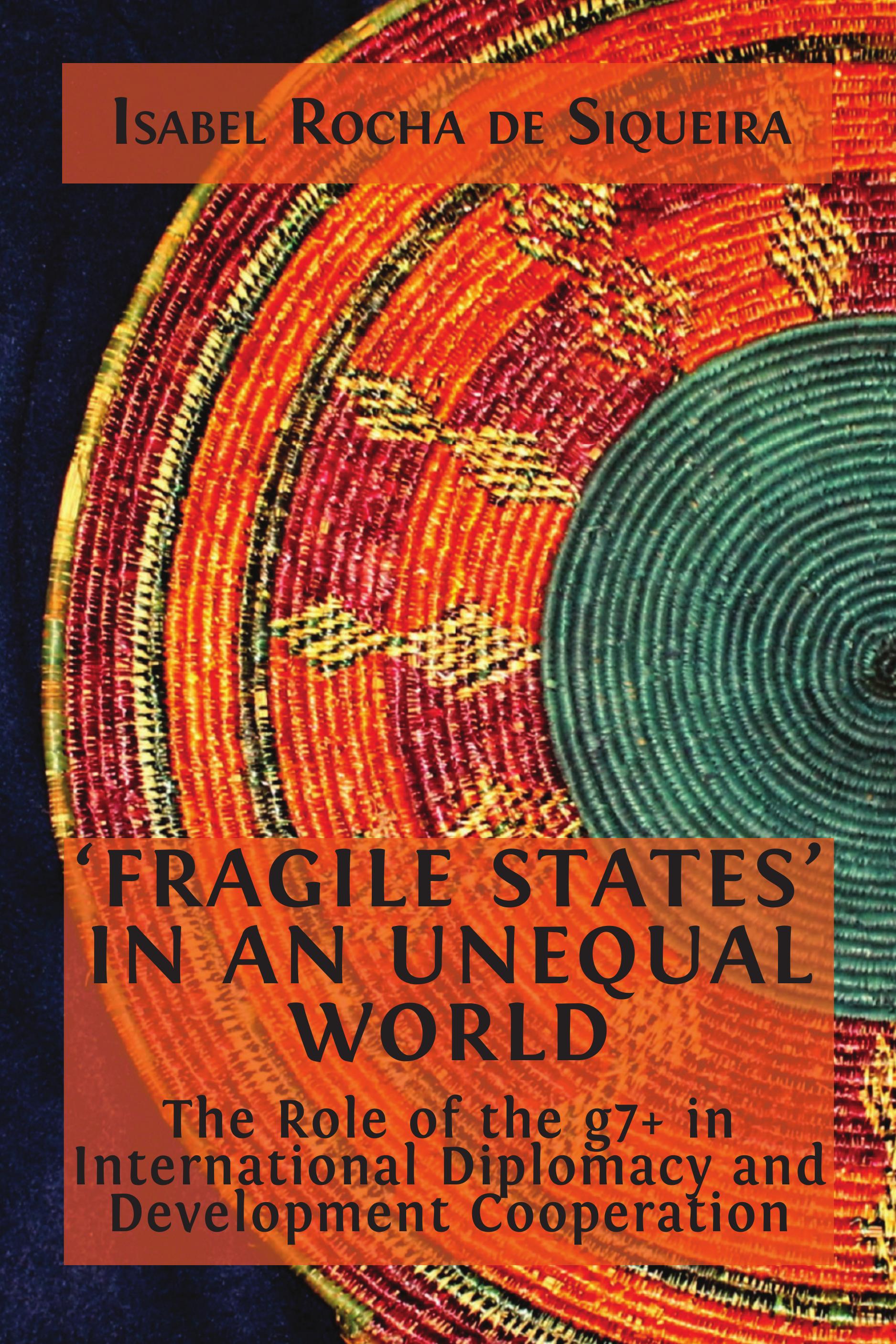
‘Fragile States’ in an Unequal World
The Role of the g7+ in International Diplomacy and Development Cooperation
Book information
- Publisher
- Open Book Publishers
- Publication
- Published 26 October 2022
- Place
- Cambridge, UK
- Catalogue record
- View in the catalogue
Abstract
This is a book about people. ‘Fragile States’ in an Unequal World: The Role of the g7+ in International Diplomacy and Development Cooperation introduces the members of the g7+, a group formed by 20 conflict-affected states: why they came to believe in politics and policy; how they feel about their work, their family and their communities; and what they want to leave behind for the next generations. It is the story of their personal and collective values, their mistakes, and the challenges they faced, and it will resonate with anyone who has tried to organize and work with a group of very different people.
This book is also a contribution for those seeking to influence international policy, especially from a disadvantageous position. It explores how to find your voice, use your survival skills, work with passion, decide how much to concede and act responsibly. Together, these lessons illuminate the paths that individual members have walked as they found their own voices, as well as how the g7+ fights to speak collectively. The book ends with a glimpse of the way forward, as Isabel Rocha de Siqueira encourages younger generations to engage with politics and policy generously, with hope for the future.
Combining literature and hard facts – along with other elements such as illustrations, cartoon strips and photographs to tell the previously untold stories of public servants in poor, conflict-affected countries, the book offers an original (and very human) micro and macro perspective on the politics of development. It will be of interest to professionals in major development organisations, students and professors in development courses, policymakers, public servants, civil society, activists working for major international NGOs, and journalists who report on the development industry, as well as those with a general interest in international development cooperation, international diplomacy and other related fields.
Chapters
| Chapter | Author | Institution at publication |
|---|---|---|
| Foreword | E.P. Xanana Gusmão | |
| A Book about People | Isabel Rocha de Siqueira | Pontifícia Universidade Católica do Rio de Janeiro |
| How to Act Responsibly | Isabel Rocha de Siqueira | Pontifícia Universidade Católica do Rio de Janeiro |
| How to Decide Where your Pride Fits | Isabel Rocha de Siqueira | Pontifícia Universidade Católica do Rio de Janeiro |
| How to Find a Voice | Isabel Rocha de Siqueira | Pontifícia Universidade Católica do Rio de Janeiro |
| How to Use your Survival Skills (to Survive Monitoring and Evaluation) | Isabel Rocha de Siqueira | Pontifícia Universidade Católica do Rio de Janeiro |
| How to Work with Passion | Isabel Rocha de Siqueira | Pontifícia Universidade Católica do Rio de Janeiro |
| The Way Forward | Isabel Rocha de Siqueira | Pontifícia Universidade Católica do Rio de Janeiro |
Where its authors and editors are based
Countries of the institutions the book's authors, editors and chapter authors were affiliated to when it was published.
- AUTHORS / EDITORS
- CITATIONS Phase 2
- USAGE Phase 3
| Country | Authors / editors |
|---|---|
| Brazil | 1 |
About this data
These figures cover 9 works. Each value comes from the most trusted source that has it; a correction made by OJC or OBC staff outranks every source.
| Source | Confidence | Works |
|---|---|---|
| Thoth | 90 / 100 | 9 |
| Works with a publication date | 100% |
|---|---|
| Works with a DOI | 100% |
| Works with a funder recorded | 0% |
| Authors with an affiliation | 89% |
| Affiliations matched to an institution (ROR) | 100% |
| Affiliations with a country | 100% |
Countries come from the institution each author was affiliated to when they published, as recorded in ROR. A country is never guessed, so authors without a matched institution are not counted on the maps.
Funders come from OpenAlex for articles and Thoth for books, where publishers recorded them. Most works record none, so a funder's figures show what is recorded, not everything it funded.
Chapters count as works: their authors and editors, and the countries of their institutions, are in every figure where Thoth records an affiliation for them.
Citations (Phase 2) and usage (Phase 3) are not collected yet.