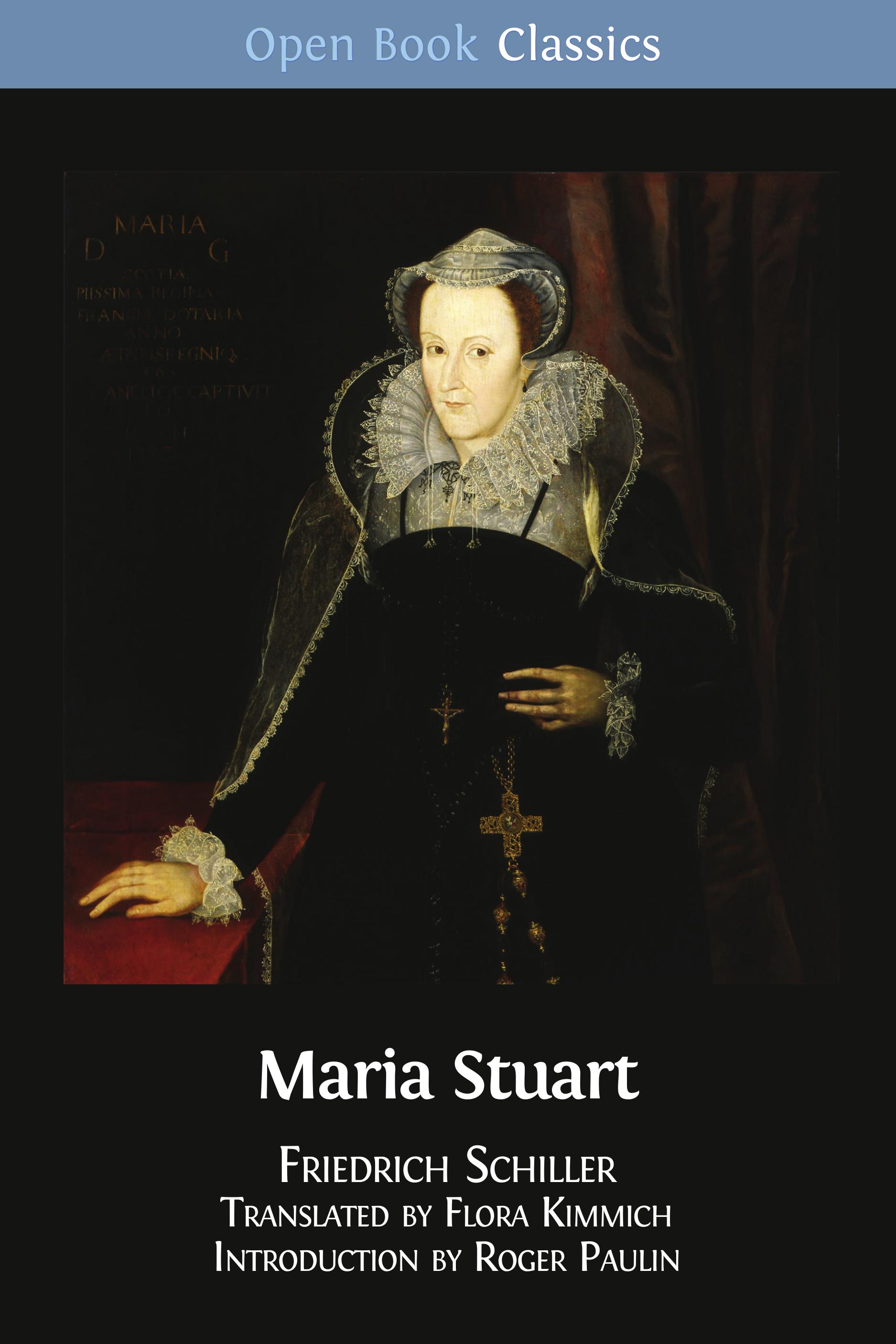
Book information
- Publisher
- Open Book Publishers
- Publication
- Published 13 November 2020
- Place
- Cambridge, UK
- Series
- Open Book Classics
- Catalogue record
- View in the catalogue
Abstract
Maria Stuart, described as Schiller’s most perfect play, is a finely balanced, inventive account of the last day of the captive Queen of Scotland, caught up in a great contest for the throne of England after the death of Henry VIII and over the question of England’s religious confession. Hope for and doubt about Mary’s deliverance grow in the first two acts, given to the Scottish and the English queen respectively, reach crisis at the center of the play, where the two queens meet in a famous scene in a castle park, and die away in acts four and five, as the action advances to its inevitable end. The play is at once classical tragedy of great fineness, costume drama of the highest order—a spectacle on the stage—and one of the great moments in the long tradition of classical rhetoric, as Elizabeth’s ministers argue for and against execution of a royal prisoner.
Flora Kimmich’s new translation carefully preserves the spirit of the original: the pathos and passion of Mary in captivity, the high seriousness of Elizabeth’s ministers in council, and the robust comedy of that queen’s untidy private life. Notes to the text identify the many historical figures who appear in the text, describe the political setting of the action, and draw attention to the structure of the play.
Roger Paulin’s introduction discusses the many threads of the conflict in Maria Stuart and enriches our understanding of this much-loved, much-produced play.
Maria Stuart is the last of a series of five new translations of Schiller’s major plays, accompanied by notes to the text and an authoritative introduction.
Chapters
| Chapter | Author | Institution at publication |
|---|---|---|
| Introduction | Roger Paulin | University of Cambridge |
| Endnotes | Flora Kimmich | |
| Maria Stuart | Friedrich Schiller | |
| Short Life of Mary Stuart | Flora Kimmich | |
| Translator’s Note | Flora Kimmich |
Where its authors and editors are based
Countries of the institutions the book's authors, editors and chapter authors were affiliated to when it was published.
- AUTHORS / EDITORS
- CITATIONS Phase 2
- USAGE Phase 3
| Country | Authors / editors |
|---|---|
| United Kingdom | 1 |
About this data
These figures cover 6 works. Each value comes from the most trusted source that has it; a correction made by OJC or OBC staff outranks every source.
| Source | Confidence | Works |
|---|---|---|
| Thoth | 90 / 100 | 6 |
| Works with a publication date | 100% |
|---|---|
| Works with a DOI | 100% |
| Works with a funder recorded | 0% |
| Authors with an affiliation | 29% |
| Affiliations matched to an institution (ROR) | 100% |
| Affiliations with a country | 100% |
Countries come from the institution each author was affiliated to when they published, as recorded in ROR. A country is never guessed, so authors without a matched institution are not counted on the maps.
Funders come from OpenAlex for articles and Thoth for books, where publishers recorded them. Most works record none, so a funder's figures show what is recorded, not everything it funded.
Chapters count as works: their authors and editors, and the countries of their institutions, are in every figure where Thoth records an affiliation for them.
Citations (Phase 2) and usage (Phase 3) are not collected yet.