Book view
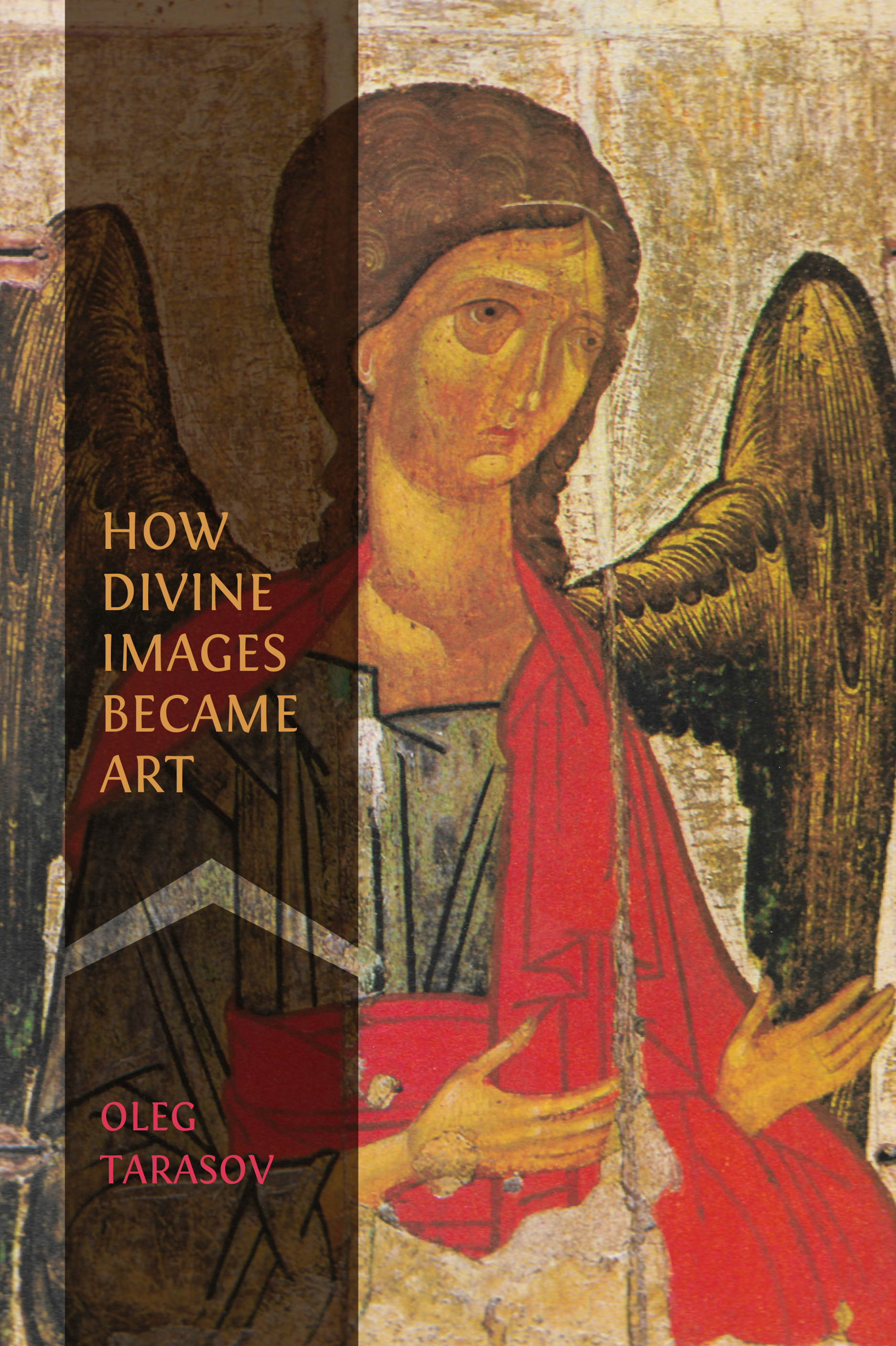
How Divine Images Became Art
Essays on the Rediscovery, Study and Collecting of Medieval Icons in the Belle Époque
Book information
- Publisher
- Open Book Publishers
- Publication
- Published 9 February 2024
- Place
- Cambridge, UK
- Catalogue record
- View in the catalogue
Abstract
How Divine Images Became Art tells the story of the parallel ‘discovery’ of Russian medieval art and of the Italian ‘primitives’ at the beginning of the twentieth century. While these two developments are well-known, they are usually studied in isolation. Tarasov’s study has the great merit of showing the connection between the art world in Russia and the West, and its impact in the cultural history of the continent in the pre-war period.
Drawing on a profound familiarity with Russian sources, some of which are little known to Western scholars, and on equally expert knowledge of Western material and scholarship, Oleg Tarasov presents a fresh perspective on early twentieth-century Russian and Western art. The author demonstrates that during the Belle Époque, the interest in medieval Russian icons and Italian ‘primitives’ lead to the recognition of both as distinctive art forms conveying a powerful spiritual message. Formalist art theory and its influence on art collecting played a major role in this recognition of aesthetic and moral value of ‘primitive’ paintings, and was instrumental in reshaping the perception of divine images as artworks.
Ultimately, this monograph represents a significant contribution to our understanding of early twentieth-century art; it will be of interest to art scholars, students and anyone interested in the spiritual and aesthetic revival of religious paintings in the Belle Époque.
Chapters
| Chapter | Author | Institution at publication |
|---|---|---|
| Introduction | Oleg Tarasov, Stella Rock | The Open University |
| 1. Fashion, Taste and Form | Oleg Tarasov, Stella Rock | The Open University |
| 2. From Images of Italy to Early Russian Art | Oleg Tarasov, Stella Rock | The Open University |
| 3. The New Museum of Medieval Icons | Oleg Tarasov, Stella Rock | The Open University |
| 4. Florenskii, Metaphysics and Reverse Perspective | Oleg Tarasov, Stella Rock | The Open University |
| Conclusion | Oleg Tarasov, Stella Rock | The Open University |
Where its authors and editors are based
Countries of the institutions the book's authors, editors and chapter authors were affiliated to when it was published.
- AUTHORS / EDITORS
- CITATIONS Phase 2
- USAGE Phase 3
| Country | Authors / editors |
|---|---|
| United Kingdom | 1 |
About this data
These figures cover 7 works. Each value comes from the most trusted source that has it; a correction made by OJC or OBC staff outranks every source.
| Source | Confidence | Works |
|---|---|---|
| Thoth | 90 / 100 | 7 |
| Works with a publication date | 100% |
|---|---|
| Works with a DOI | 100% |
| Works with a funder recorded | 0% |
| Authors with an affiliation | 50% |
| Affiliations matched to an institution (ROR) | 100% |
| Affiliations with a country | 100% |
Countries come from the institution each author was affiliated to when they published, as recorded in ROR. A country is never guessed, so authors without a matched institution are not counted on the maps.
Funders come from OpenAlex for articles and Thoth for books, where publishers recorded them. Most works record none, so a funder's figures show what is recorded, not everything it funded.
Chapters count as works: their authors and editors, and the countries of their institutions, are in every figure where Thoth records an affiliation for them.
Citations (Phase 2) and usage (Phase 3) are not collected yet.