Book view
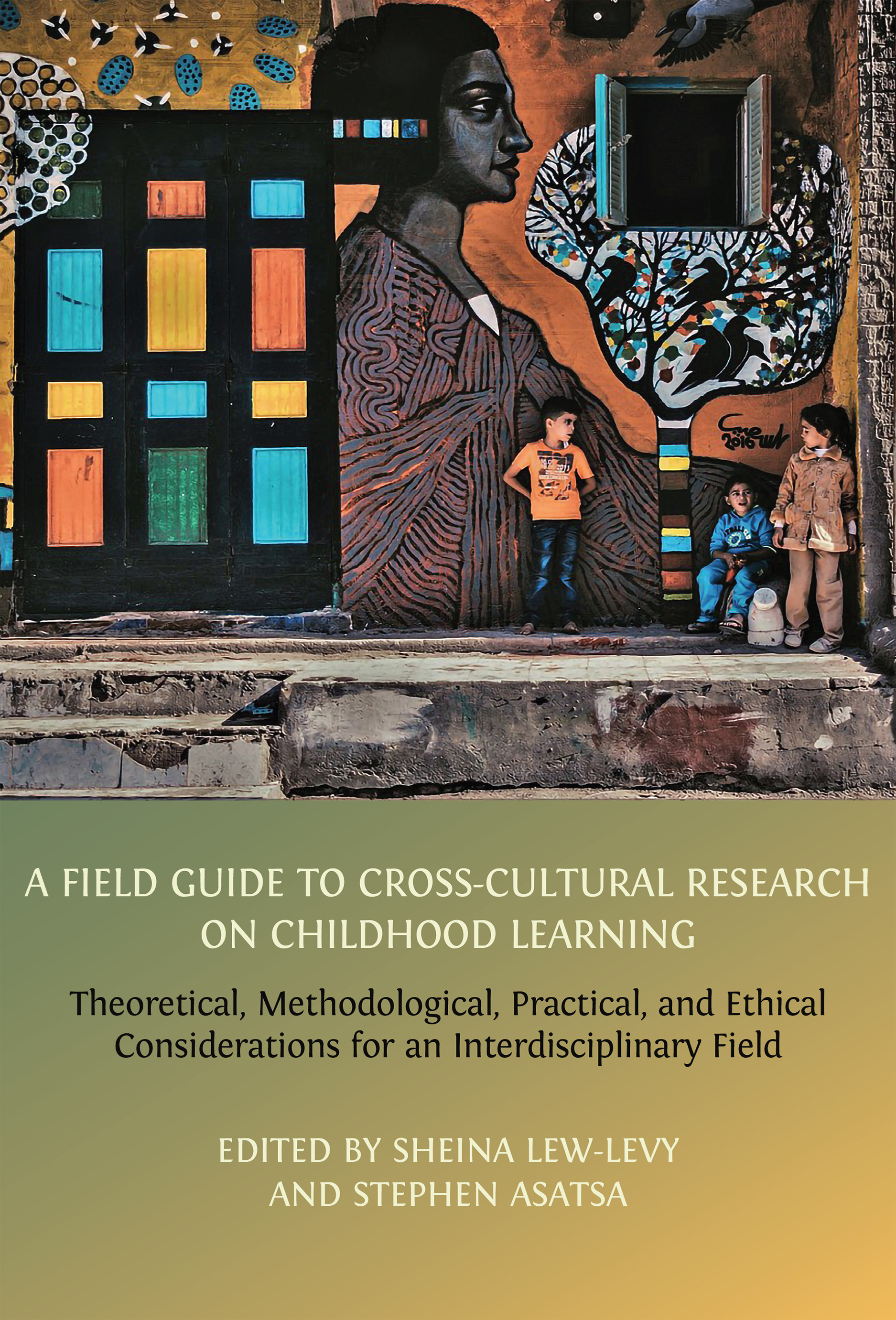
A Field Guide to Cross-Cultural Research on Childhood Learning
Theoretical, Methodological, Practical, and Ethical Considerations for an Interdisciplinary Field
Edited by Sheina Lew-Levy, Stephen Asatsa
Book information
- Publisher
- Open Book Publishers
- Publication
- Published 9 May 2025
- Place
- Cambridge, UK
- Catalogue record
- View in the catalogue
Abstract
This volume addresses the critical gaps in developmental research on childhood learning by advocating for a more inclusive and cross-cultural approach. Recent studies highlight a concerning over-reliance on data from post-industrialized western countries, raising questions about the broader applicability of findings. This book seeks to provide a comprehensive solution, bridging the gap between theory and practice.
It offers a unique guide for researchers by combining interdisciplinary perspectives from anthropology, psychology, education, and beyond. With over 60 contributors from 21 countries, the book weaves together diverse cultural insights, challenging the narrow scope of traditional research. Each chapter features multiple perspectives, creating a coherent and thoughtful discussion of essential topics such as cultural learning, childhood, and the historical and social forces shaping development.
'A Field Guide to Cross-Cultural Research on Childhood Learning' goes beyond theoretical discussions by offering practical advice on fieldwork, ethics, and engaging policymakers. By centering marginalized voices and emphasizing community agency, it strives to democratize developmental research.
The format is innovative, merging the breadth of encyclopedic entries with the depth of cohesive chapters. Moreover personal reflections and photographs embedded in the book will give readers a window into the experiences of those involved in cross-cultural research on children.
This accessible, academically rigorous volume is a must-read for scholars seeking to advance inclusive and sustainable research on childhood learning, and anybody interested in child development in a worldwide perspective.
Chapters
| Chapter | Author | Institution at publication |
|---|---|---|
| 1. Studying childhood learning across cultures | Helen Elizabeth Davis, Dorsa Amir, Feryl Badiani, Michelle Kline, Nokwanda Ndlovu, Sarah Pope-Caldwell, Bruce Rawlings, Nachita Rosun, Nicole Wen | Arizona State University; Duke University; Victoria University of Wellington; Brunel University of London; Purdue University System; Georgia State University; Durham University; Oxford Brookes University |
| 2. A history of cross-cultural research on childhood learning | Tanya MacGillivray, Zahra Halavani, Ivan Kroupin, Akira Takada, Jing Xu, Seth Oppong, Natália Dutra, Barry Hewlett, Felix Reide, April Nowell | Simon Fraser University; London School of Economics and Political Science; Harvard University; Kyoto University; University of Washington; Universidade Federal do Pará; Washington State University; Aarhus University; University of Victoria |
| 3. Charting a middle course | Ivan Kroupin, Felix Reide, April Nowell, Chantal Medaets, Mark Nielsen, Ana Maria R. Gomes, Gairan Pamei, Patricia M. Greenfield, Andrea Taverna, Andrew D. Coppens, Akira Takada, Miguel Silan, Heidi Keller, Kara Weisman, Bruno Ferreira | London School of Economics and Political Science; Harvard University; Aarhus University; University of Victoria; Universidade Estadual de Campinas (UNICAMP); The University of Queensland; University of Johannesburg; Universidade Federal de Minas Gerais; Chinese University of Hong Kong; University of California, Los Angeles; Consejo Nacional de Investigaciones Científicas y Técnicas; National University of Rosario; University of New Hampshire; Kyoto University; Université Lumière Lyon 2; Osnabrück University; University of California, Riverside; Universidade Federal do Rio Grande do Sul |
| 4. Research Methods | Elena Miu, Michelle Kline, Ilaria Pretelli, Bruce Rawlings, Katja Liebal, David F. Lancy, Jing Xu, Heejung Park, Annemieke Milks, Felix Reide, Roman Stengelin, Akira Takada, Joscha Kärtner | Aarhus University; Brunel University of London; Toulouse School of Economics; Durham University; Leipzig University; Utah State University; University of Washington; Scripps College; University of Reading; Max Planck Institute for Evolutionary Anthropology; Kyoto University; University of Münster |
| 5. Preparing for the field | Adam Boyette, Dorsa Amir, Adam Boyette, Alejandrina Cristia, Alyssa N. Crittenden, Ardain Dzabatou, Michael Gurven, Vidrige Kandza, Patricia Kanngiesser, Nokwanda Ndlovu, Sarah Pope-Caldwell, Marie Schäfer, Andrea Taverna | Max Planck Institute for Evolutionary Anthropology; Duke University; École Normale Supérieure - PSL; University of Nevada, Las Vegas; Marien Ngouabi University; University of California, Santa Barbara; University of Plymouth; Purdue University System; Georgia State University; Leipzig University; Consejo Nacional de Investigaciones Científicas y Técnicas; National University of Rosario |
| 6. Negotiating fieldwork challenges | Jing Xu, Bonnie Hewlett, Bruce Rawlings, Camila Scaff, Monika Abels, Xiaojie Tian, Feryl Badiani, Nokwanda Ndlovu, Nachita Rosun, Seth Oppong | University of Washington; Washington State University; Durham University; University of Zurich; École Normale Supérieure - PSL; UiT The Arctic University of Norway; University of Tsukuba; Victoria University of Wellington; Purdue University System; Oxford Brookes University; Brunel University of London |
| 7. Sharing your research | Tanya MacGillivray, Yitong Wang, Srujana Duggirala, Alejandrina Cristia, Natália Dutra, Xiaojie Tian, Annemieke Milks, Dorsa Amir, Claire Hodson, Sarah Pope-Caldwell | Simon Fraser University; École Normale Supérieure - PSL; Universidade Federal do Pará; University of Tsukuba; University of Reading; Duke University; Durham University; Georgia State University |
| 8. Learning to navigate change | Dustin Eirdosh, Susan Hanisch, Patricia M. Greenfield, Barnabas Simatende, Adi Prasetijo, Cika Aprilia, Noa Lavi, Seetha Kakkoth, Vinod Chellan, Athul Muchukunnu, Carrie Rothstein-Fisch, Elise Trumbull, Blanca Guerrero-Meyer, Dustin Eirdosh | Max Planck Institute for Evolutionary Anthropology; Friedrich Schiller University Jena; University of California, Los Angeles; Diponegoro University; University of Indonesia; University of Haifa; Kannur University; Cochin University of Science and Technology; California State University, Northridge; Fresno Pacific University |
| 9. Policy | Ilaria Pretelli, Stephen Asatsa, Tatjana Puschkarsky | Toulouse School of Economics; Catholic University of Eastern Africa |
| 10. Looking forward, looking back | Sheina Lew-Levy, Stephen Asatsa | Durham University; Catholic University of Eastern Africa |
Where its authors and editors are based
Countries of the institutions the book's authors, editors and chapter authors were affiliated to when it was published.
- AUTHORS / EDITORS
- CITATIONS Phase 2
- USAGE Phase 3
| Country | Authors / editors |
|---|---|
| United States | 17 |
| Germany | 9 |
| United Kingdom | 9 |
| Canada | 5 |
| Brazil | 4 |
| France | 4 |
| Denmark | 2 |
| India | 2 |
All 20 countries
| Country | Authors / editors |
|---|---|
| United States | 17 |
| Germany | 9 |
| United Kingdom | 9 |
| Canada | 5 |
| Brazil | 4 |
| France | 4 |
| Denmark | 2 |
| India | 2 |
| Indonesia | 2 |
| Japan | 2 |
| Argentina | 1 |
| Australia | 1 |
| Hong Kong | 1 |
| Israel | 1 |
| Kenya | 1 |
| New Zealand | 1 |
| Norway | 1 |
| Republic of the Congo | 1 |
| South Africa | 1 |
| Switzerland | 1 |
About this data
These figures cover 11 works. Each value comes from the most trusted source that has it; a correction made by OJC or OBC staff outranks every source.
| Source | Confidence | Works |
|---|---|---|
| Thoth | 90 / 100 | 11 |
| Works with a publication date | 100% |
|---|---|
| Works with a DOI | 100% |
| Works with a funder recorded | 0% |
| Authors with an affiliation | 94% |
| Affiliations matched to an institution (ROR) | 100% |
| Affiliations with a country | 100% |
Countries come from the institution each author was affiliated to when they published, as recorded in ROR. A country is never guessed, so authors without a matched institution are not counted on the maps.
Funders come from OpenAlex for articles and Thoth for books, where publishers recorded them. Most works record none, so a funder's figures show what is recorded, not everything it funded.
Chapters count as works: their authors and editors, and the countries of their institutions, are in every figure where Thoth records an affiliation for them.
Citations (Phase 2) and usage (Phase 3) are not collected yet.