Book information
- Publisher
- Open Book Publishers
- Publication
- Published 13 January 2014
- Place
- Cambridge, UK
- Catalogue record
- View in the catalogue
Abstract
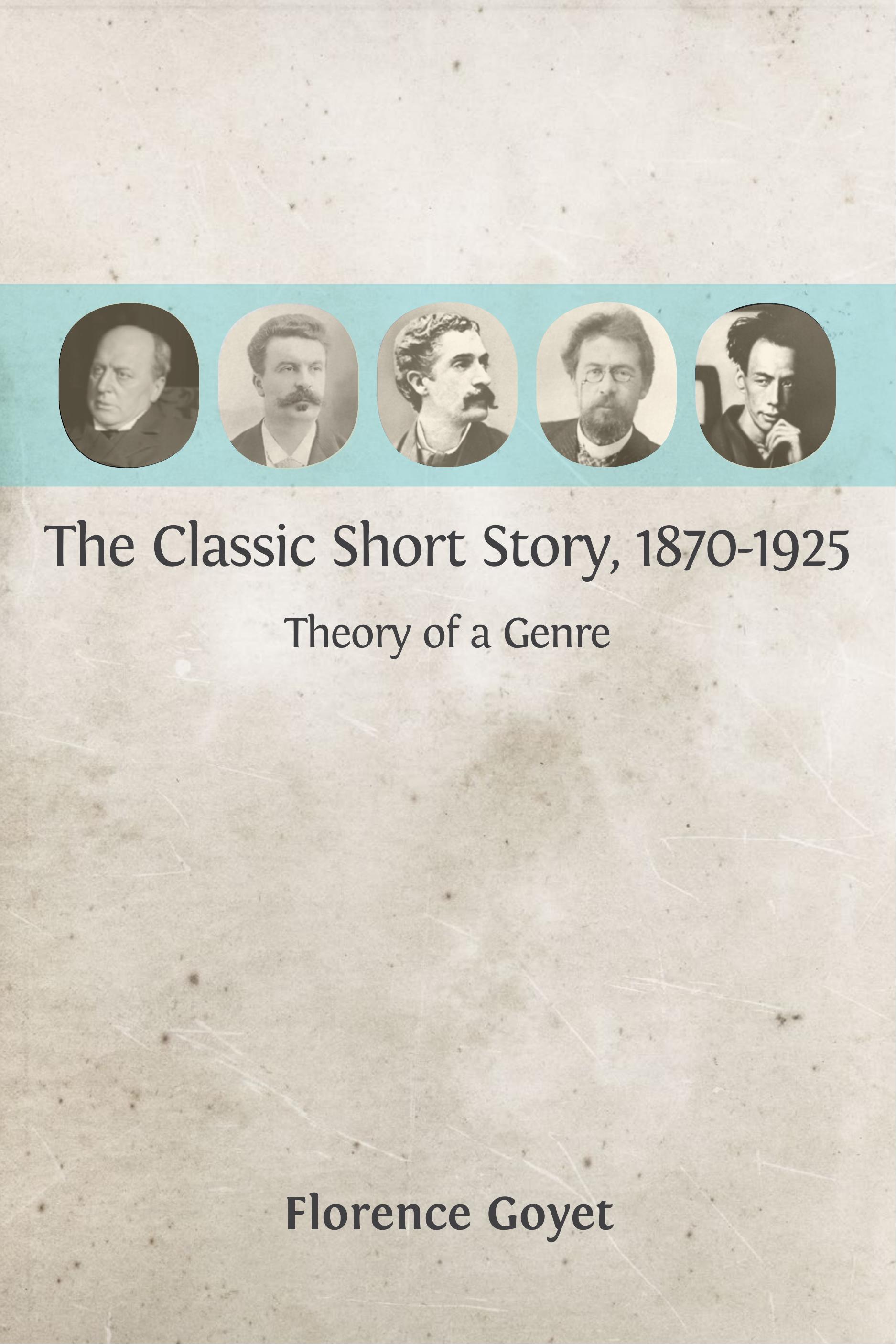
The ability to construct a nuanced narrative or complex character in the constrained form of the short story has sometimes been seen as the ultimate test of an author's creativity. Yet during the time when the short story was at its most popular - the late nineteenth and early twentieth centuries - even the greatest writers followed strict generic conventions that were far from subtle. This expanded and updated translation of Florence Goyet's influential La Nouvelle, 1870-1925: Description d'un genre à son apogée (Paris, 1993) is the only study to focus exclusively on this classic period across different continents. Ranging through French, English, Italian, Russian and Japanese writing - particularly the stories of Guy de Maupassant, Henry James, Giovanni Verga, Anton Chekhov and Akutagawa Ryūnosuke - Goyet shows that these authors were able to create brilliant and successful short stories using the very simple 'tools of brevity' of that period. In this challenging and far-reaching study, Goyet looks at classic short stories in the context in which they were read at the time: cheap newspapers and higher-end periodicals. She demonstrates that, despite the apparent intention of these stories to question bourgeois ideals, they mostly affirmed the prejudices of their readers. In doing so, her book forces us to re-think our preconceptions about this 'forgotten' genre.
Chapters
Where its authors and editors are based
Countries of the institutions the book's authors, editors and chapter authors were affiliated to when it was published.
- AUTHORS / EDITORS
- CITATIONS Phase 2
- USAGE Phase 3
| Country | Authors / editors |
|---|---|
| France | 1 |
About this data
These figures cover 15 works. Each value comes from the most trusted source that has it; a correction made by OJC or OBC staff outranks every source.
| Source | Confidence | Works |
|---|---|---|
| Thoth | 90 / 100 | 15 |
| Works with a publication date | 100% |
|---|---|
| Works with a DOI | 100% |
| Works with a funder recorded | 0% |
| Authors with an affiliation | 94% |
| Affiliations matched to an institution (ROR) | 100% |
| Affiliations with a country | 100% |
Countries come from the institution each author was affiliated to when they published, as recorded in ROR. A country is never guessed, so authors without a matched institution are not counted on the maps.
Funders come from OpenAlex for articles and Thoth for books, where publishers recorded them. Most works record none, so a funder's figures show what is recorded, not everything it funded.
Chapters count as works: their authors and editors, and the countries of their institutions, are in every figure where Thoth records an affiliation for them.
Citations (Phase 2) and usage (Phase 3) are not collected yet.