Book information
- Publisher
- Open Book Publishers
- Publication
- Published 10 September 2021
- Place
- Cambridge, UK
- Series
- Semitic Languages and Cultures
- Catalogue record
- View in the catalogue
Abstract
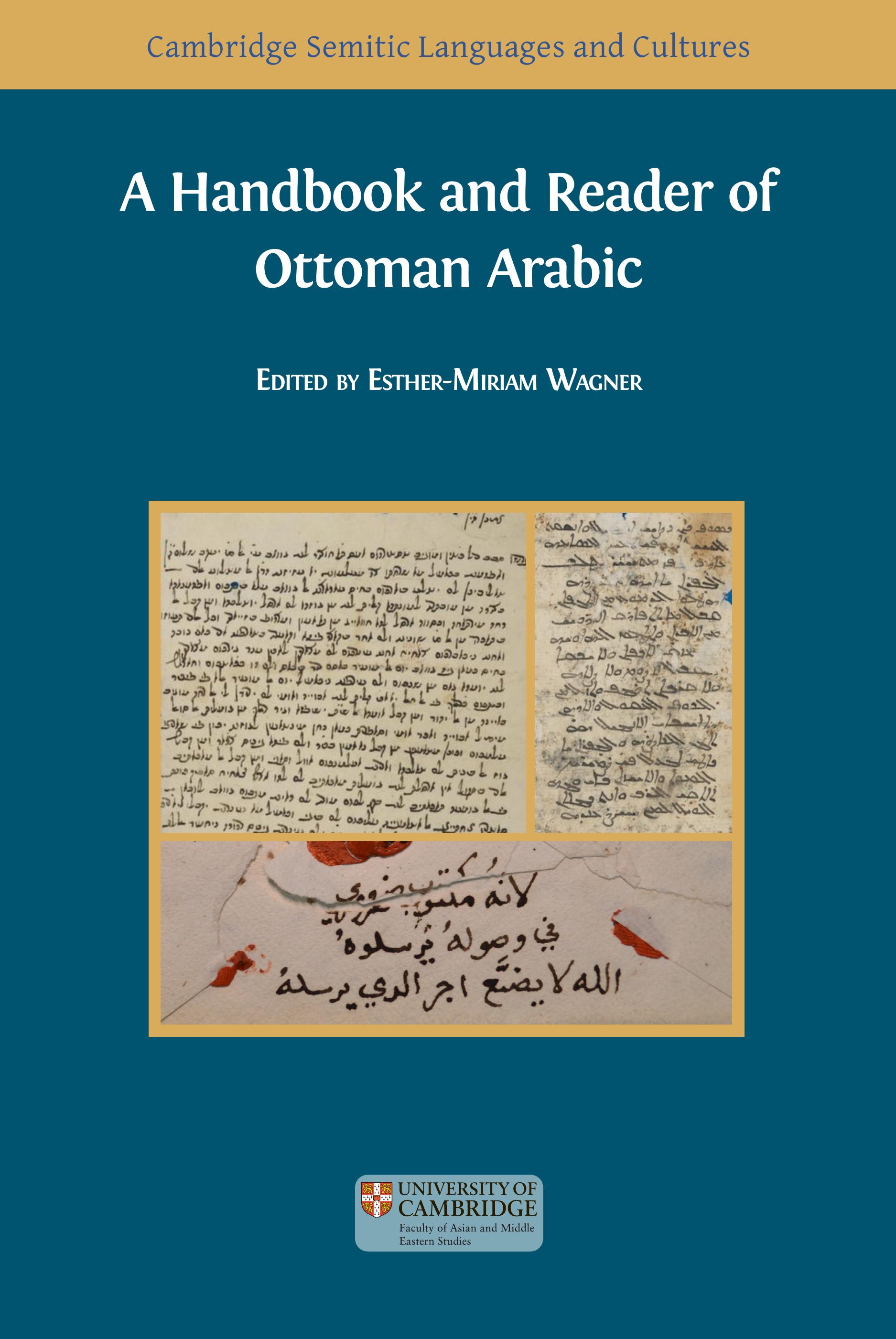
Written forms of Arabic composed during the era of the Ottoman Empire present an immensely fruitful linguistic topic. Extant texts display a proximity to the vernacular that cannot be encountered in any other surviving historical Arabic material, and thus provide unprecedented access to Arabic language history.
This rich material remains very little explored. Traditionally, scholarship on Arabic has focussed overwhelmingly on the literature of the various Golden Ages between the 8th and 13th centuries, whereas texts from the 15th century onwards have often been viewed as corrupted and not worthy of study. The lack of interest in Ottoman Arabic culture and literacy left these sources almost completely neglected in university courses.
This volume is the first linguistic work to focus exclusively on varieties of Christian, Jewish and Muslim Arabic in the Ottoman Empire of the 15th to the 20th centuries, and present Ottoman Arabic material in a didactic and easily accessible way. Split into a Handbook and a Reader section, the book provides a historical introduction to Ottoman literacy, translation studies, vernacularisation processes, language policy and linguistic pluralism. The second part contains excerpts from more than forty sources, edited and translated by a diverse network of scholars.
The material presented includes a large number of yet unedited texts, such as Christian Arabic letters from the Prize Paper collections, mercantile correspondence and notebooks found in the Library of Gotha, and Garshuni texts from archives of Syriac patriarchs.
Chapters
Where its authors and editors are based
Countries of the institutions the book's authors, editors and chapter authors were affiliated to when it was published.
- AUTHORS / EDITORS
- CITATIONS Phase 2
- USAGE Phase 3
| Country | Authors / editors |
|---|---|
| United Kingdom | 6 |
| United States | 5 |
| Germany | 2 |
| Israel | 2 |
| The Netherlands | 2 |
| Egypt | 1 |
| Morocco | 1 |
| Spain | 1 |
All 9 countries
| Country | Authors / editors |
|---|---|
| United Kingdom | 6 |
| United States | 5 |
| Germany | 2 |
| Israel | 2 |
| The Netherlands | 2 |
| Egypt | 1 |
| Morocco | 1 |
| Spain | 1 |
| Turkey | 1 |
About this data
These figures cover 44 works. Each value comes from the most trusted source that has it; a correction made by OJC or OBC staff outranks every source.
| Source | Confidence | Works |
|---|---|---|
| Thoth | 90 / 100 | 44 |
| Works with a publication date | 100% |
|---|---|
| Works with a DOI | 100% |
| Works with a funder recorded | 0% |
| Authors with an affiliation | 61% |
| Affiliations matched to an institution (ROR) | 100% |
| Affiliations with a country | 100% |
Countries come from the institution each author was affiliated to when they published, as recorded in ROR. A country is never guessed, so authors without a matched institution are not counted on the maps.
Funders come from OpenAlex for articles and Thoth for books, where publishers recorded them. Most works record none, so a funder's figures show what is recorded, not everything it funded.
Chapters count as works: their authors and editors, and the countries of their institutions, are in every figure where Thoth records an affiliation for them.
Citations (Phase 2) and usage (Phase 3) are not collected yet.