Book view
Waltzing Through Europe
Attitudes towards Couple Dances in the Long Nineteenth Century
Edited by Egil Bakka, Theresa Jill Buckland, Helena Saarikoski, Anne von Bibra Wharton
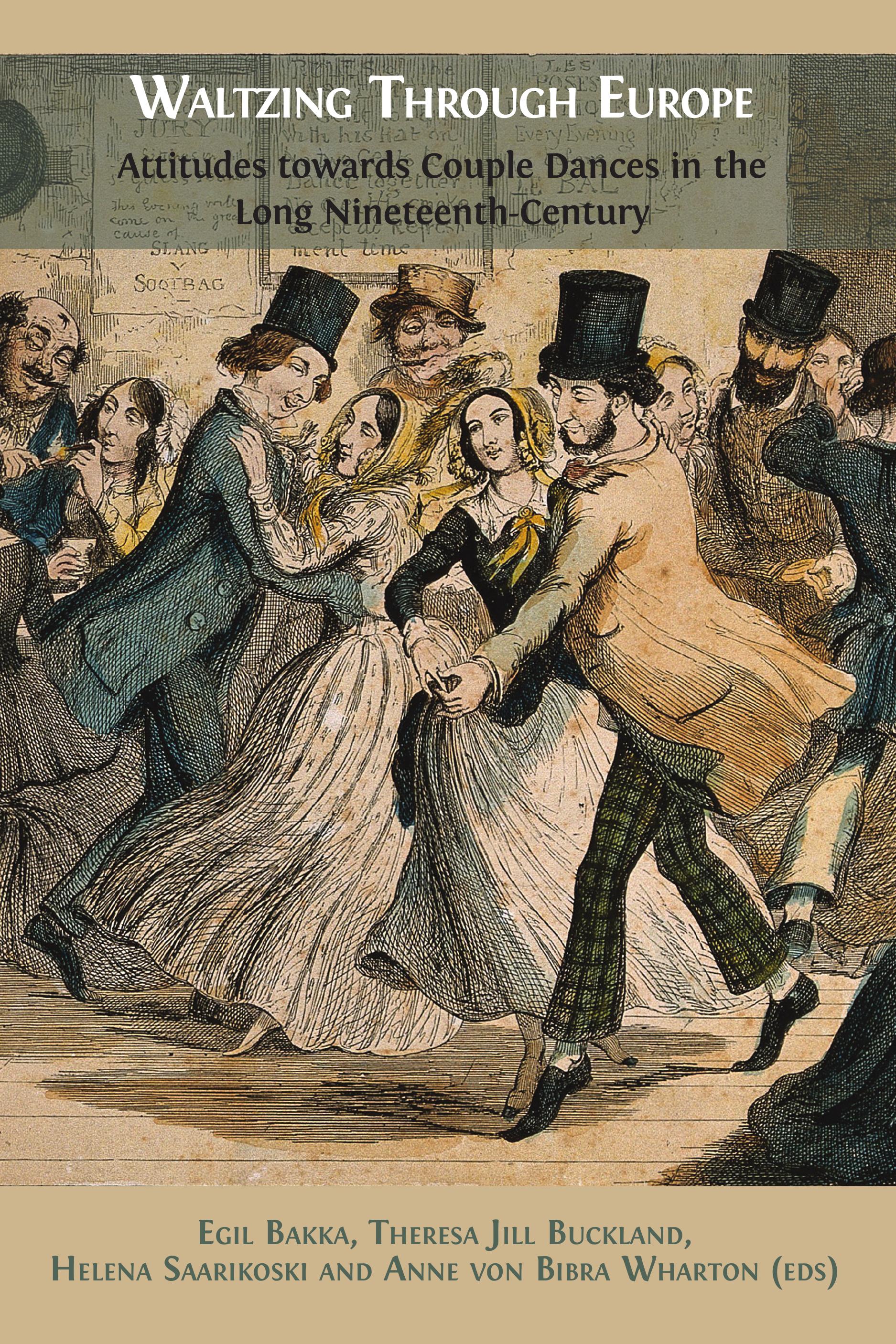
Book information
- Publisher
- Open Book Publishers
- Publication
- Published 10 September 2020
- Place
- Cambridge, UK
- Catalogue record
- View in the catalogue
Abstract
From ‘folk devils’ to ballroom dancers, Waltzing Through Europe explores the changing reception of fashionable couple dances in Europe from the eighteenth century onwards.
A refreshing intervention in dance studies, this book brings together elements of historiography, cultural memory, folklore, and dance across comparatively narrow but markedly heterogeneous localities. Rooted in investigations of often newly discovered primary sources, the essays afford many opportunities to compare sociocultural and political reactions to the arrival and practice of popular rotating couple dances, such as the Waltz and the Polka. Leading contributors provide a transnational and affective lens onto strikingly diverse topics, ranging from the evolution of romantic couple dances in Croatia, and Strauss’s visits to Hamburg and Altona in the 1830s, to dance as a tool of cultural preservation and expression in twentieth-century Finland.
Waltzing Through Europe creates openings for fresh collaborations in dance historiography and cultural history across fields and genres. It is essential reading for researchers of dance in central and northern Europe, while also appealing to the general reader who wants to learn more about the vibrant histories of these familiar dance forms.
Chapters
Where its authors and editors are based
Countries of the institutions the book's authors, editors and chapter authors were affiliated to when it was published.
- AUTHORS / EDITORS
- CITATIONS Phase 2
- USAGE Phase 3
About this data
These figures cover 16 works. Each value comes from the most trusted source that has it; a correction made by OJC or OBC staff outranks every source.
| Source | Confidence | Works |
|---|---|---|
| Thoth | 90 / 100 | 16 |
| Works with a publication date | 100% |
|---|---|
| Works with a DOI | 100% |
| Works with a funder recorded | 0% |
| Authors with an affiliation | 90% |
| Affiliations matched to an institution (ROR) | 100% |
| Affiliations with a country | 100% |
Countries come from the institution each author was affiliated to when they published, as recorded in ROR. A country is never guessed, so authors without a matched institution are not counted on the maps.
Funders come from OpenAlex for articles and Thoth for books, where publishers recorded them. Most works record none, so a funder's figures show what is recorded, not everything it funded.
Chapters count as works: their authors and editors, and the countries of their institutions, are in every figure where Thoth records an affiliation for them.
Citations (Phase 2) and usage (Phase 3) are not collected yet.