Book view
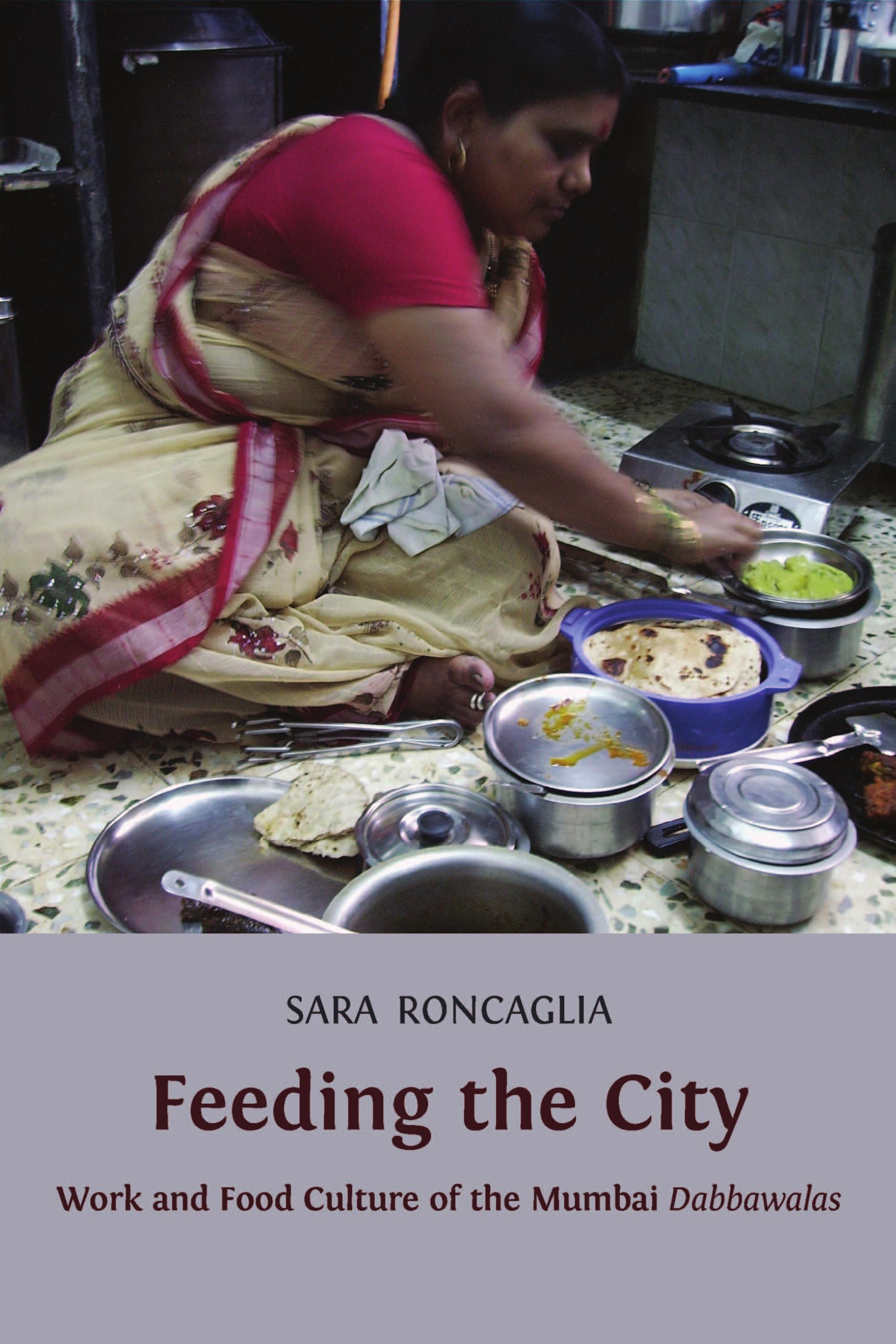
Feeding the City
Work and Food Culture of the Mumbai Dabbawalas
Book information
- Publisher
- Open Book Publishers
- Publication
- Published 15 July 2013
- Place
- Cambridge, UK
- Catalogue record
- View in the catalogue
Abstract
Every day in Mumbai 5,000 dabbawalas (literally translated as "those who carry boxes") distribute a staggering 200,000 home-cooked lunchboxes to the city’s workers and students. Giving employment and status to thousands of largely illiterate villagers from Mumbai's hinterland, this co-operative has been in operation since the late nineteenth century. It provides one of the most efficient delivery networks in the world: only one lunch in six million goes astray.
Feeding the City is an ethnographic study of the fascinating inner workings of Mumbai's dabbawalas. Cultural anthropologist Sara Roncaglia explains how they cater to the various dietary requirements of a diverse and increasingly global city, where the preparation and consumption of food is pervaded with religious and cultural significance. Developing the idea of "gastrosemantics" – a language with which to discuss the broader implications of cooking and eating – Roncaglia's study helps us to rethink our relationship to food at a local and global level. The publication of this book is financed by the generous support of interested readers and organisations, who made donations using the crowd-funding website unglue.it
Chapters
| Chapter | Author | Institution at publication |
|---|---|---|
| Bombay-Mumbai and the Dabbawalas: Origin and Development of a Parallel Economy | Sara Roncaglia | University of Turin |
| Dabbawala Ethics in Transition | Sara Roncaglia | University of Turin |
| Nutan Mumbai Tiffin Box Suppliers Charity Trust: The Shaping of Dabbawala Relations | Sara Roncaglia | University of Turin |
| Appendix: Theory and Practice for an Ethnography of Diversities | Sara Roncaglia | University of Turin |
| Conclusions: Tastes and Cultures | Sara Roncaglia | University of Turin |
Where its authors and editors are based
Countries of the institutions the book's authors, editors and chapter authors were affiliated to when it was published.
- AUTHORS / EDITORS
- CITATIONS Phase 2
- USAGE Phase 3
| Country | Authors / editors |
|---|---|
| Italy | 1 |
About this data
These figures cover 6 works. Each value comes from the most trusted source that has it; a correction made by OJC or OBC staff outranks every source.
| Source | Confidence | Works |
|---|---|---|
| Thoth | 90 / 100 | 6 |
| Works with a publication date | 100% |
|---|---|
| Works with a DOI | 100% |
| Works with a funder recorded | 0% |
| Authors with an affiliation | 75% |
| Affiliations matched to an institution (ROR) | 100% |
| Affiliations with a country | 100% |
Countries come from the institution each author was affiliated to when they published, as recorded in ROR. A country is never guessed, so authors without a matched institution are not counted on the maps.
Funders come from OpenAlex for articles and Thoth for books, where publishers recorded them. Most works record none, so a funder's figures show what is recorded, not everything it funded.
Chapters count as works: their authors and editors, and the countries of their institutions, are in every figure where Thoth records an affiliation for them.
Citations (Phase 2) and usage (Phase 3) are not collected yet.