Book information
- Publisher
- Open Book Publishers
- Publication
- Published 11 September 2015
- Place
- Cambridge, UK
- Catalogue record
- View in the catalogue
Abstract
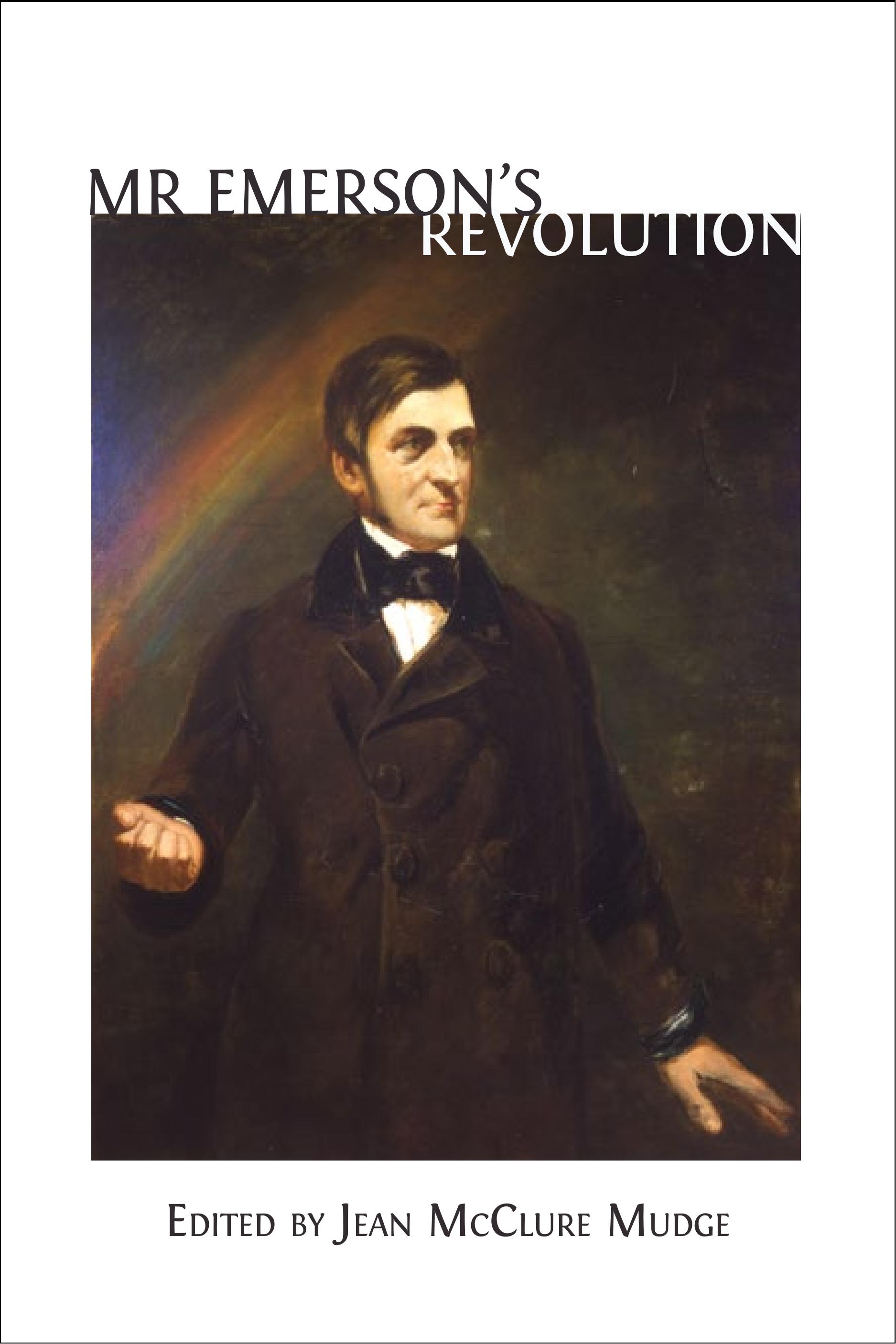
This volume traces the life, thought and work of Ralph Waldo Emerson, a giant of American intellectual history, whose transforming ideas greatly strengthened the two leading reform issues of his day: abolition and women’s rights. A broad and deep, yet cautious revolutionary, he spoke about a spectrum of inner and outer realities—personal, philosophical, theological and cultural—all of which gave his mid-career turn to political and social issues their immediate and lasting power.
This multi-authored study frankly explores Emerson's private prejudices against blacks and women while he also publicly championed their causes. Such a juxtaposition freshly charts the evolution of Emerson's slow but steady application of his early neo-idealism to emancipating blacks and freeing women from social bondage. His shift from philosopher to active reformer had lasting effects not only in America but also abroad.
In the U.S. Emerson influenced such diverse figures as Thoreau, Whitman, Dickinson and William James and in Europe Mickiewicz, Wilde, Kipling, Nietzsche, and Camus in Europe as well as many leading followers in India and Japan. The book includes over 170 illustrations, among them eight custom-made maps of Emerson's haunts and wide-ranging lecture itineraries as well as a new four-part chronology of his life placed alongside both national and international events as well as major inventions.
Mr. Emerson's Revolution provides essential reading for students and teachers of American intellectual history, the abolitionist and women’s rights movement―and for anyone interested in the nineteenth-century roots of these seismic social changes.
Chapters
| Chapter | Author | Institution at publication |
|---|---|---|
| Introduction: Emerson as Spiritual and Social Revolutionary | Jean McClure Mudge | |
| 1.1 A Legacy of Revolt, 1803-1821 | Phyllis Cole | Pennsylvania State System of Higher Education |
| 1.2 Becoming an American “Adam,” 1822-1835 | Wesley T. Mott | Worcester Polytechnic Institute |
| 2.1 The “New Thinking”: Nature, Self, and Society, 1836-1850 | David M. Robinson | Oregon State University |
| 2.2 Dialogues with Self and Society, 1835-1860 | Jean McClure Mudge | |
| 3. Pragmatic Idealist in Action, 1850-1865 | Len Gougeon | University of Scranton |
| 4. Actively Entering Old Age, 1865-1882 | Jean McClure Mudge | |
| 5. Spawning a Wide New Consciousness | Jean McClure Mudge | |
| 6.1 Europe in Emerson and Emerson in Europe | Beniamino Soressi | |
| 6.2 Asia in Emerson and Emerson in Asia | Alan Hodder | Hampshire College |
| Emerson: A Chronology 1803-1882 | Jean McClure Mudge | |
| Foreward: Emerson's Renewing Power | John Stauffer, Steven Brown | Harvard University |
Where its authors and editors are based
Countries of the institutions the book's authors, editors and chapter authors were affiliated to when it was published.
- AUTHORS / EDITORS
- CITATIONS Phase 2
- USAGE Phase 3
| Country | Authors / editors |
|---|---|
| United States | 7 |
About this data
These figures cover 13 works. Each value comes from the most trusted source that has it; a correction made by OJC or OBC staff outranks every source.
| Source | Confidence | Works |
|---|---|---|
| Thoth | 90 / 100 | 13 |
| Works with a publication date | 100% |
|---|---|
| Works with a DOI | 100% |
| Works with a funder recorded | 8% |
| Authors with an affiliation | 50% |
| Affiliations matched to an institution (ROR) | 100% |
| Affiliations with a country | 100% |
Countries come from the institution each author was affiliated to when they published, as recorded in ROR. A country is never guessed, so authors without a matched institution are not counted on the maps.
Funders come from OpenAlex for articles and Thoth for books, where publishers recorded them. Most works record none, so a funder's figures show what is recorded, not everything it funded.
Chapters count as works: their authors and editors, and the countries of their institutions, are in every figure where Thoth records an affiliation for them.
Citations (Phase 2) and usage (Phase 3) are not collected yet.