Book view
Technology, Media Literacy, and the Human Subject
A Posthuman Approach
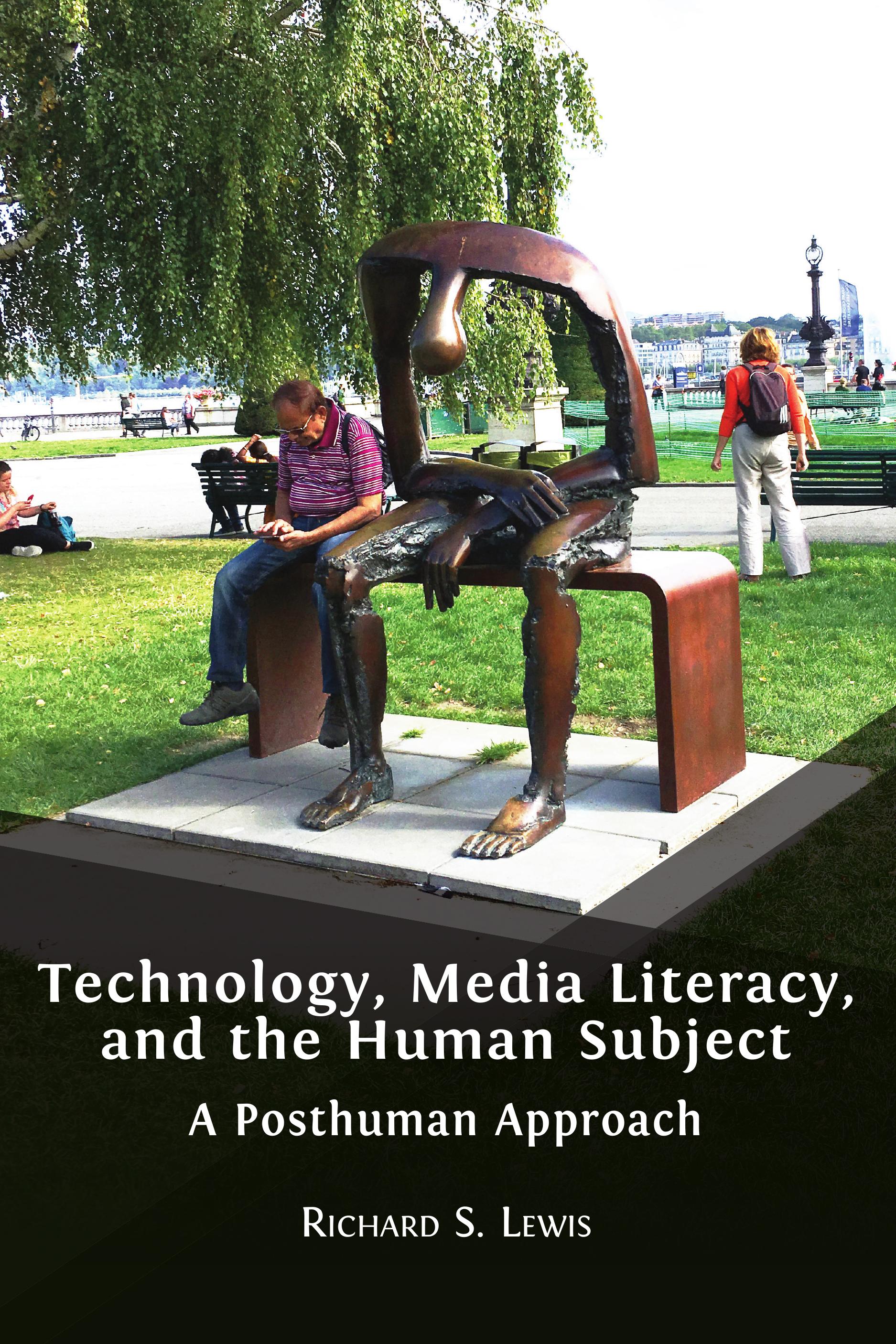
Book information
- Publisher
- Open Book Publishers
- Publication
- Published 3 June 2021
- Place
- Cambridge, UK
- Catalogue record
- View in the catalogue
Abstract
What does it mean to be media literate in today’s world? How are we transformed by the many media infrastructures around us? We are immersed in a world mediated by information and communication technologies (ICTs). From hardware like smartphones, smartwatches, and home assistants to software like Facebook, Instagram, Twitter, and Snapchat, our lives have become a complex, interconnected network of relations. Scholarship on media literacy has tended to focus on developing the skills to access, analyze, evaluate, and create media messages without considering or weighing the impact of the technological medium—how it enables and constrains both messages and media users. Additionally, there is often little attention paid to the broader context of interrelations which affect our engagement with media technologies.
This book addresses these issues by providing a transdisciplinary method that allows for both practical and theoretical analyses of media investigations. Informed by postphenomenology, media ecology, philosophical posthumanism, and complexity theory the author proposes both a framework and a pragmatic instrument for understanding the multiplicity of relations that all contribute to how we affect—and are affected by—our relations with media technology. The author argues persuasively that the increased awareness provided by this posthuman approach affords us a greater chance for reclaiming some of our agency and provides a sound foundation upon which we can then judge our media relations. This book will be an indispensable tool for educators in media literacy and media studies, as well as academics in philosophy of technology, media and communication studies, and the post-humanities.
Chapters
| Chapter | Author | Institution at publication |
|---|---|---|
| 1. Introduction | Richard S. Lewis | Université Catholique de Lille |
| 2. Situating Media Literacy | Richard S. Lewis | Université Catholique de Lille |
| 3. Understanding the Medium Through the Technological Relation | Richard S. Lewis | Université Catholique de Lille |
| 4. The Posthuman | Richard S. Lewis | Université Catholique de Lille |
| 5. Developing the Intrasubjective Mediating Framework | Richard S. Lewis | Université Catholique de Lille |
| 6. Developing an Instrument to Leverage the Framework | Richard S. Lewis | Université Catholique de Lille |
| 7. Conclusion | Richard S. Lewis | Université Catholique de Lille |
Where its authors and editors are based
Countries of the institutions the book's authors, editors and chapter authors were affiliated to when it was published.
- AUTHORS / EDITORS
- CITATIONS Phase 2
- USAGE Phase 3
| Country | Authors / editors |
|---|---|
| France | 1 |
About this data
These figures cover 8 works. Each value comes from the most trusted source that has it; a correction made by OJC or OBC staff outranks every source.
| Source | Confidence | Works |
|---|---|---|
| Thoth | 90 / 100 | 8 |
| Works with a publication date | 100% |
|---|---|
| Works with a DOI | 100% |
| Works with a funder recorded | 12% |
| Authors with an affiliation | 100% |
| Affiliations matched to an institution (ROR) | 100% |
| Affiliations with a country | 100% |
Countries come from the institution each author was affiliated to when they published, as recorded in ROR. A country is never guessed, so authors without a matched institution are not counted on the maps.
Funders come from OpenAlex for articles and Thoth for books, where publishers recorded them. Most works record none, so a funder's figures show what is recorded, not everything it funded.
Chapters count as works: their authors and editors, and the countries of their institutions, are in every figure where Thoth records an affiliation for them.
Citations (Phase 2) and usage (Phase 3) are not collected yet.