Book view
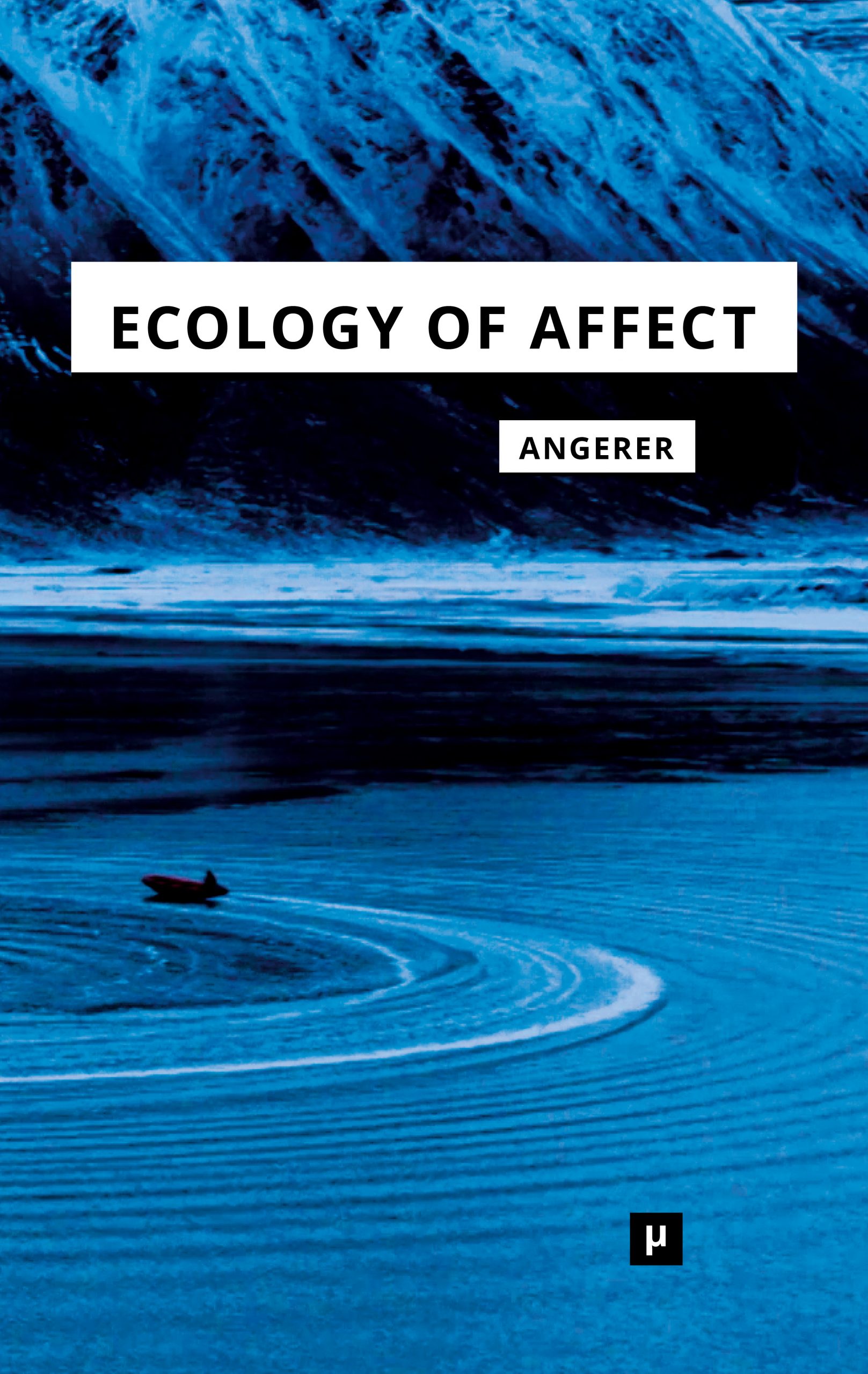
Ecology of Affect
Intensive Milieus and Contingent Encounters
Book information
- Publisher
- meson press
- Publication
- Published 2 May 2017
- Place
- Lüneburg
- DOI
- 10.14619/020
- Catalogue record
- View in the catalogue
Abstract
The way we conceive the human today is particularly affected by the shifts in media technology during the 20th century. Affect emerges as the new liminal concept that renders the body compatible in novel ways with the technology and politics of media. By ways of a relational reorganization the organic end technological life is condensed in a new, intense way to an ecology of affects.
Where its authors and editors are based
Countries of the institutions the book's authors, editors and chapter authors were affiliated to when it was published.
- AUTHORS / EDITORS
- CITATIONS Phase 2
- USAGE Phase 3
| Country | Authors / editors |
|---|---|
| Germany | 1 |
About this data
These figures cover 1 work. Each value comes from the most trusted source that has it; a correction made by OJC or OBC staff outranks every source.
| Source | Confidence | Works |
|---|---|---|
| Thoth | 90 / 100 | 1 |
| Works with a publication date | 100% |
|---|---|
| Works with a DOI | 100% |
| Works with a funder recorded | 0% |
| Authors with an affiliation | 50% |
| Affiliations matched to an institution (ROR) | 100% |
| Affiliations with a country | 100% |
Countries come from the institution each author was affiliated to when they published, as recorded in ROR. A country is never guessed, so authors without a matched institution are not counted on the maps.
Funders come from OpenAlex for articles and Thoth for books, where publishers recorded them. Most works record none, so a funder's figures show what is recorded, not everything it funded.
Chapters count as works: their authors and editors, and the countries of their institutions, are in every figure where Thoth records an affiliation for them.
Citations (Phase 2) and usage (Phase 3) are not collected yet.