Book view
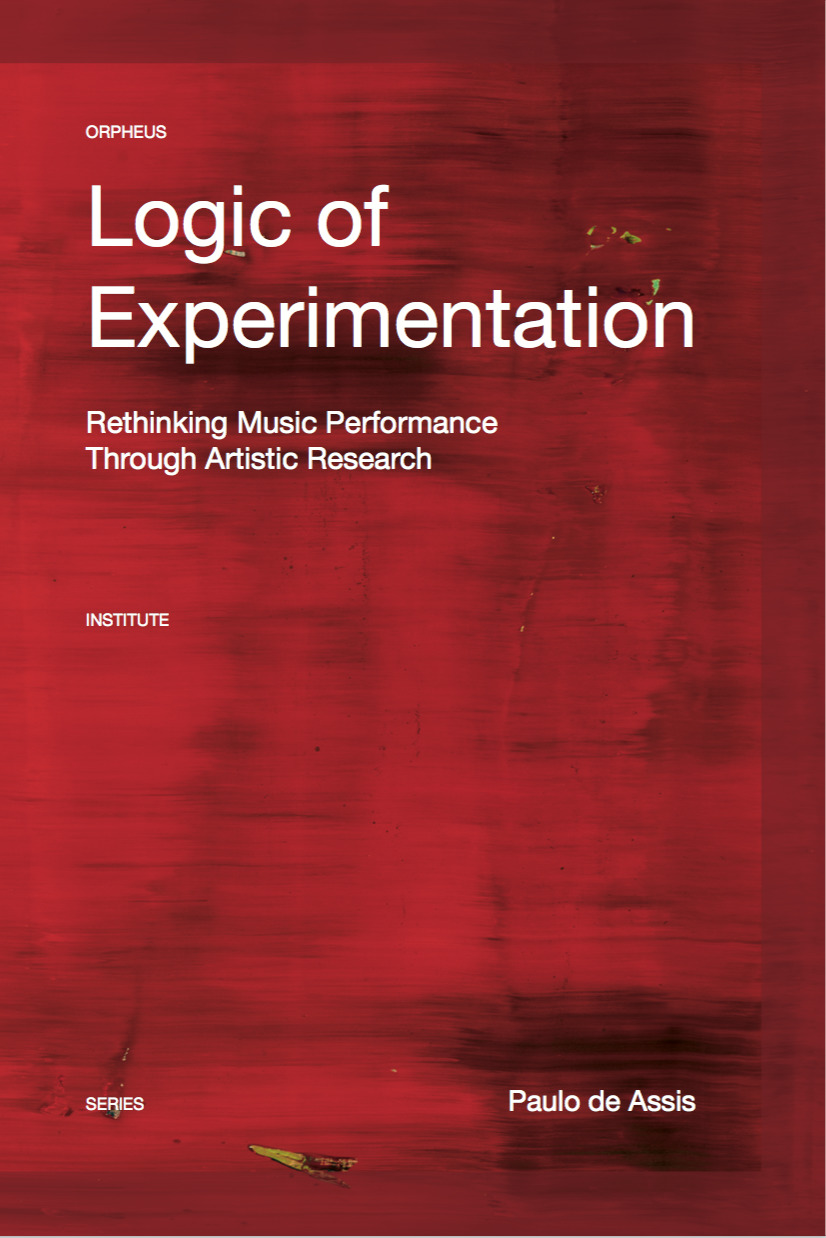
Logic of Experimentation
Reshaping Music Performance in and through Artistic Research
Book information
- Publisher
- Leuven University Press
- Publication
- Published 19 October 2018
- Place
- Leuven, BE
- Series
- Orpheus Institute Series
- Catalogue record
- View in the catalogue
Abstract
Beyond interpretation: a proposal for experimental performance practices
Logic of Experimentation offers several innovative and ground-breaking perspectives on music performance, music ontology, research methodologies and ethics of performance. It proposes new modes of thinking and exposing past musical works to contemporary audiences, arguing for a new kind of performer, emancipated from authoritative texts and traditions, whose creativity is propelled by intensive research and inventive imagination. Moving beyond the work-concept, Logic of Experimentation presents a new image of musical works, based upon the notions of strata, assemblage and diagram, advancing innovative practice-based methodologies that integrate archival and musicological research into the creative process leading to a performance. Beyond representational modes of performance—be it mainstream or historically informed performance practices—Logic of Experimentation creates an ontological, methodological and ethical space for experimental performance practices, arguing for a new mode of performance. Written in an experimental style, its eight chapters appropriate music performance concepts from post-structural philosophy, psychoanalysis, science and technology studies, epistemology and semiotics, displaying how transdisciplinarity is central to artistic research. An indispensable contribution to artistic research in music, Logic of Experimentation is compelling reading for music performers, composers, musicologists, philosophers and artist researchers alike.
Ebook available in Open Access.
This publication is GPRC-labeled (Guaranteed Peer-Reviewed Content).
Where its authors and editors are based
Countries of the institutions the book's authors, editors and chapter authors were affiliated to when it was published.
- AUTHORS / EDITORS
- CITATIONS Phase 2
- USAGE Phase 3
No affiliations with a known country in these years yet.
About this data
These figures cover 1 work. Each value comes from the most trusted source that has it; a correction made by OJC or OBC staff outranks every source.
| Source | Confidence | Works |
|---|---|---|
| Thoth | 90 / 100 | 1 |
| Works with a publication date | 100% |
|---|---|
| Works with a DOI | 100% |
| Works with a funder recorded | 100% |
| Authors with an affiliation | 0% |
Countries come from the institution each author was affiliated to when they published, as recorded in ROR. A country is never guessed, so authors without a matched institution are not counted on the maps.
Funders come from OpenAlex for articles and Thoth for books, where publishers recorded them. Not every work records one, so a funder's figures show what is recorded, not everything it funded.
Chapters count as works: their authors and editors, and the countries of their institutions, are in every figure where Thoth records an affiliation for them.
Citations (Phase 2) and usage (Phase 3) are not collected yet.