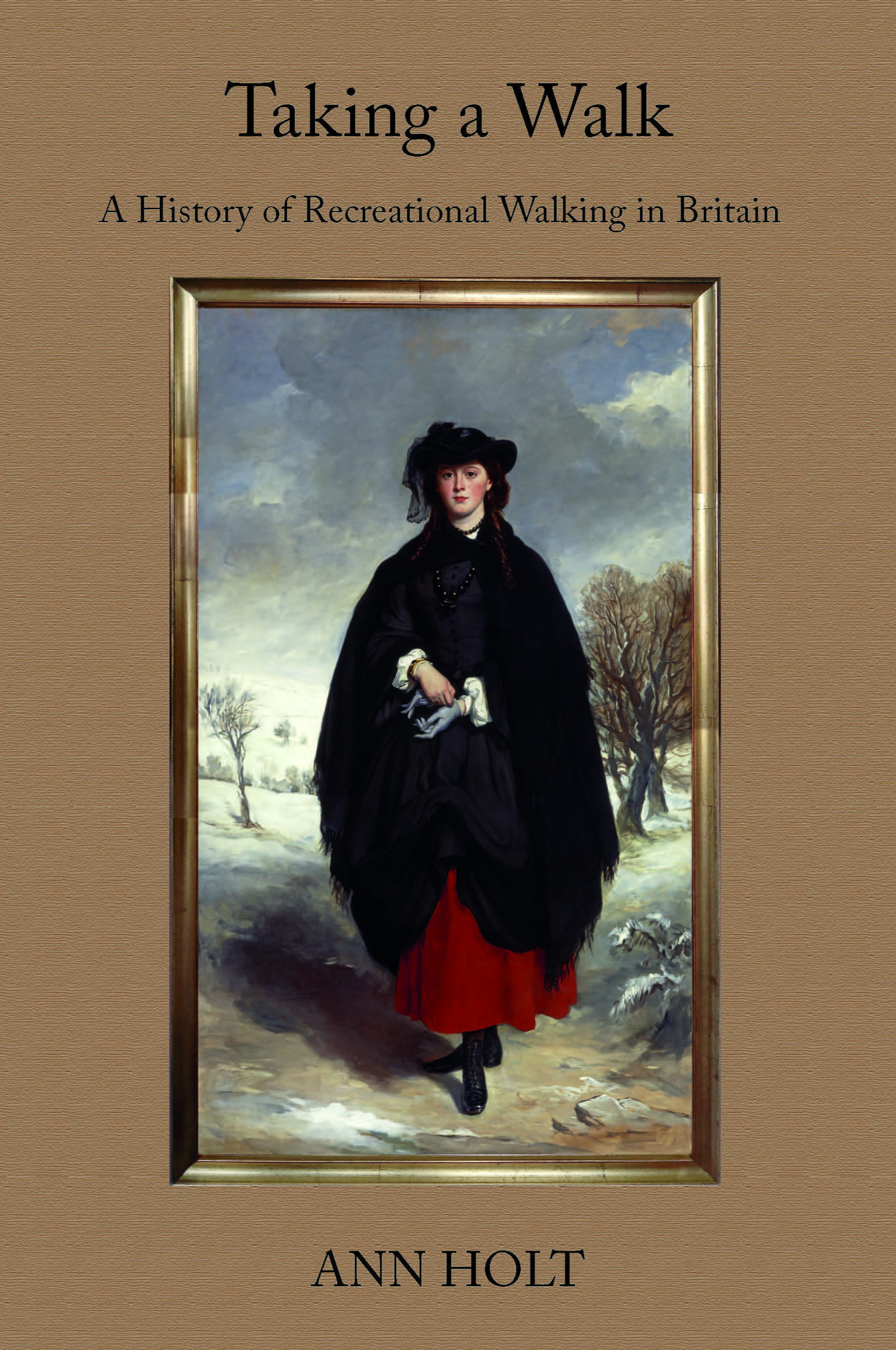
Book information
- Publisher
- White Horse Press
- Publication
- Published 19 January 2024
- Place
- Winwick, Cambs. UK
- Catalogue record
- View in the catalogue
Abstract
Walking is a simple and popular recreation, but one that comes freighted with meaning, social attitudes and value judgements. We are not simply left to walk if we feel like it – we are urged by various levels of government and opinion formers to walk more, in order to help the environment or improve our mental and physical health. What is recreational walking anyway? A walk can be a stroll round a small open space in a city or a long hike over demanding terrain in weather that blurs the boundary between exercise and endurance. The stroller and the strider can be the same person at different times, though most walkers have a preference for one end of the spectrum. Walking has appealed to all sorts of people throughout its long recorded history, and this volume delves into a rich variety of sources about walking from the 12th to the 20th century, including diaries, letters, memoirs, poems, fiction, government reports and newspapers.
The more committed have not only enjoyed walking but have thought of themselves and been recognised by others as ‘walkers’, even though all manner of people have walked for recreation. Walking in a socially approved place, in the right sort of clothing, observing the decorum of the time, was a mark of respectability until quite recently. When large numbers of young people were able to take new opportunities to get to the countryside in the 1920s and 1930s, dressing and behaving in ways that expressed their own needs and desires, they were often seen as comic, deplorably urban, socially inferior and in the wrong place. Walkers of all kinds have frequently been regarded as ‘in the wrong place’. In the countryside the walker is potentially in disputed territory, questioning one of the sacred tenets of post-enclosure Britain – the association of landownership with power, prestige and the foundations of the social order. This has led to the pattern of exclusion which marks our present relationship with the countryside. In response, an organised social movement to represent the interests and advance the causes of recreational walking claimed a place in the politics of landownership, which is once again in the public eye.
Chapters
| Chapter | Author | Institution at publication |
|---|---|---|
| Introduction | ||
| Between Wars, 1: The Open Air | ||
| Between Wars, 2: Hikers and Ramblers | ||
| Going for a Walk | ||
| Open Spaces, Open Country | ||
| Resistance | ||
| Right of Footway | ||
| Three Peaks: 50 Years of Legislation | ||
| Walkers | ||
| Walking through the Mind-field, 1: Walkers and the World | ||
| Walking through the Mind-field, 2: A Community of Walkers | ||
| Why walk? |
Where its authors and editors are based
Countries of the institutions the book's authors, editors and chapter authors were affiliated to when it was published.
- AUTHORS / EDITORS
- CITATIONS Phase 2
- USAGE Phase 3
No affiliations with a known country in these years yet.
About this data
These figures cover 13 works. Each value comes from the most trusted source that has it; a correction made by OJC or OBC staff outranks every source.
| Source | Confidence | Works |
|---|---|---|
| Thoth | 90 / 100 | 13 |
| Works with a publication date | 100% |
|---|---|
| Works with a DOI | 8% |
| Works with a funder recorded | 0% |
| Authors with an affiliation | 0% |
Countries come from the institution each author was affiliated to when they published, as recorded in ROR. A country is never guessed, so authors without a matched institution are not counted on the maps.
Funders come from OpenAlex for articles and Thoth for books, where publishers recorded them. Most works record none, so a funder's figures show what is recorded, not everything it funded.
Chapters count as works: their authors and editors, and the countries of their institutions, are in every figure where Thoth records an affiliation for them.
Citations (Phase 2) and usage (Phase 3) are not collected yet.