Book view
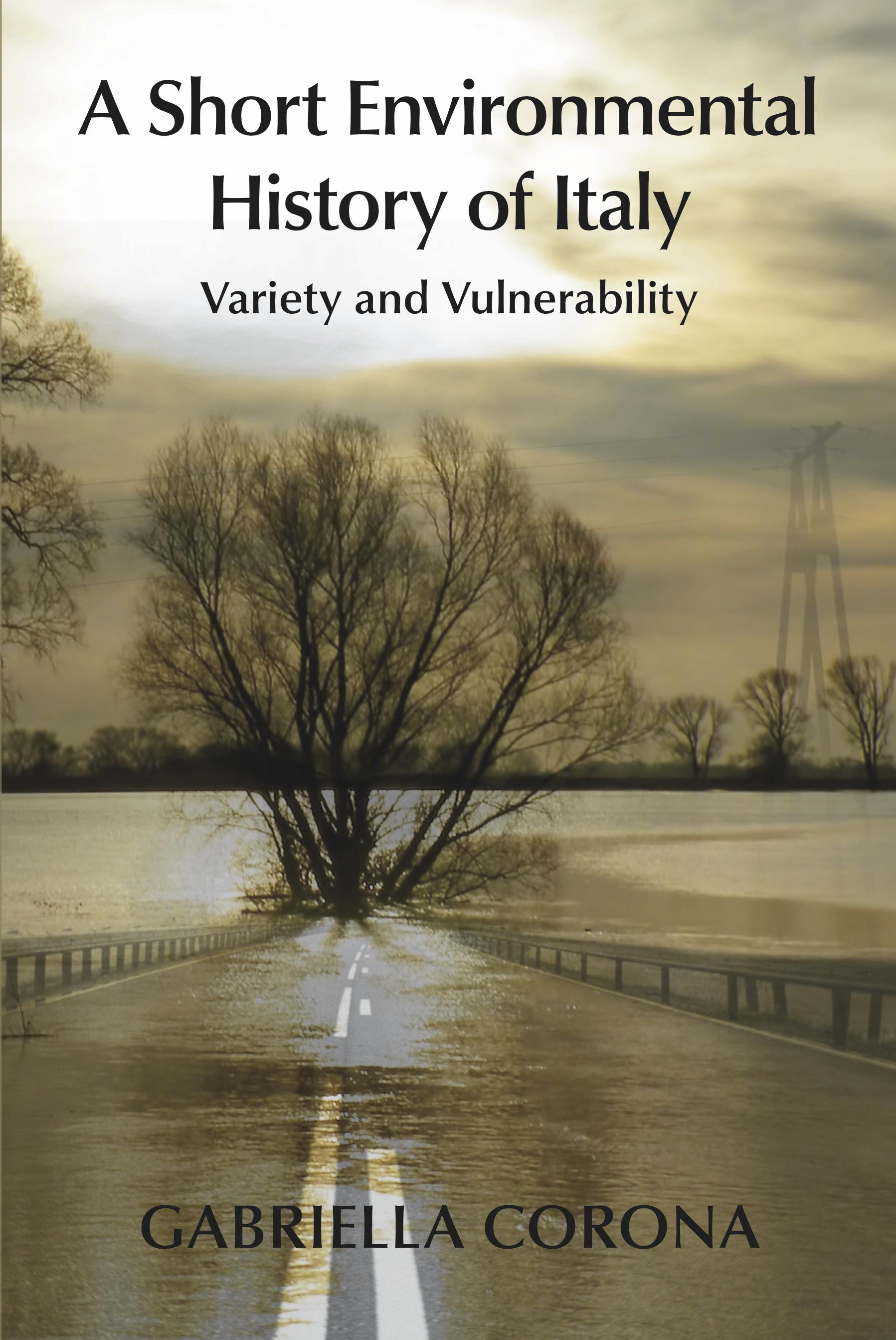
A Short Environmental History of Italy
Variety and Vulnerability
Book information
- Publisher
- White Horse Press
- Publication
- Published 1 June 2017
- Place
- Winwick, UK
- Catalogue record
- View in the catalogue
Abstract
This book, a translation of the author’s original Italian 'Breve Storia dell’Ambiente in Italia' (Il Mulino, 2015) aims to bring together the general lines of interpretation of Italian environmental history from the decades prior to national unification to the present day, laying foundations for the writing of national history from an environmental history perspective. The volume reconstructs processes of change in the use of natural resources in Italy, and the associated environmental and social consequences. The use in historical analysis of a polysemic concept such as ‘environment’ expresses the deep synergies in the history of Italy that have tied together nature and human activities, ecological and socio-economic issues. The ancient roots of settlement, early anthropisation by past civilisations and historical features of the processes of transformation of rural and agricultural landscapes to which large areas of the peninsula have been subject impose a historical reconstruction in which changes in the use of natural resources are closely intertwined with changes in the territory considered as a natural historical context, built and humanised. Furthermore, corollary to the great richness and variety of nature and landscape, the artistic and archaeological sites, agriculture, gastronomy and oenology, that have ‘supported’ the country in its rise to global political significance, is vulnerability in terms of geological fragility, hydrographic system and seismicity.
The book aims to understand how Italy as a unitary state has ruled the balance of an area overwhelmed by the impact of an economic development model characterised by high consumption of natural resources and energy. With this in mind, an important focus of consideration is the relevance of public policies, and the relationship between policy-makers and the knowledge experts that influence them.
Where its authors and editors are based
Countries of the institutions the book's authors, editors and chapter authors were affiliated to when it was published.
- AUTHORS / EDITORS
- CITATIONS Phase 2
- USAGE Phase 3
| Country | Authors / editors |
|---|---|
| Italy | 1 |
About this data
These figures cover 1 work. Each value comes from the most trusted source that has it; a correction made by OJC or OBC staff outranks every source.
| Source | Confidence | Works |
|---|---|---|
| Thoth | 90 / 100 | 1 |
| Works with a publication date | 100% |
|---|---|
| Works with a DOI | 0% |
| Works with a funder recorded | 0% |
| Authors with an affiliation | 50% |
| Affiliations matched to an institution (ROR) | 100% |
| Affiliations with a country | 100% |
Countries come from the institution each author was affiliated to when they published, as recorded in ROR. A country is never guessed, so authors without a matched institution are not counted on the maps.
Funders come from OpenAlex for articles and Thoth for books, where publishers recorded them. Most works record none, so a funder's figures show what is recorded, not everything it funded.
Chapters count as works: their authors and editors, and the countries of their institutions, are in every figure where Thoth records an affiliation for them.
Citations (Phase 2) and usage (Phase 3) are not collected yet.