Book view
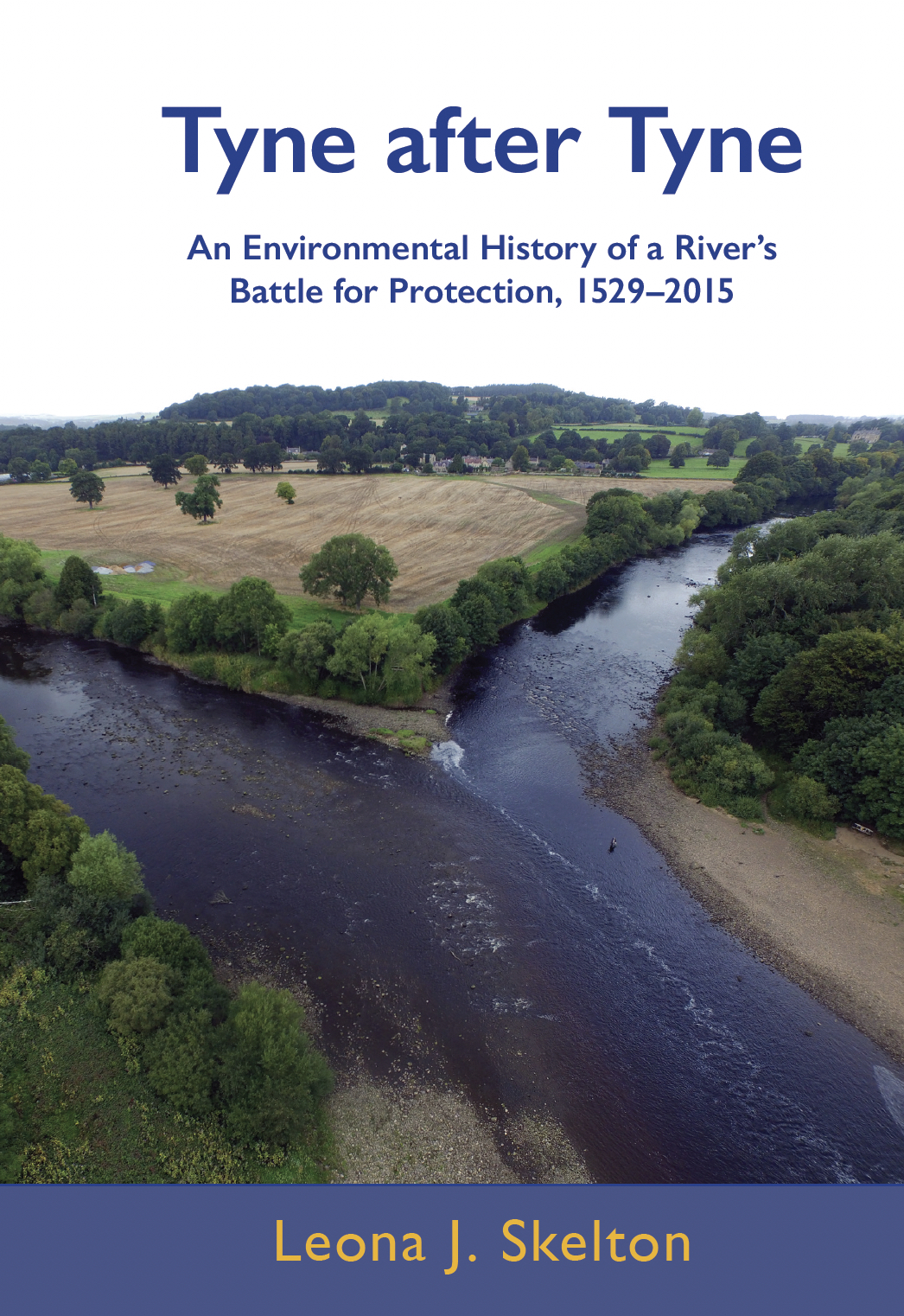
Tyne after Tyne
An Environmental History of a River's Battle for Protection 1529-2015
Book information
- Publisher
- White Horse Press
- Publication
- Published 1 March 2017
- Place
- Winwick, UK
- Catalogue record
- View in the catalogue
Abstract
Over the last five centuries, North-East England’s River Tyne went largely with the flow as it rode with us on a rollercoaster from technologically limited early modern oligarchy, to large-scale Victorian ‘improvement’, to twentieth-century deoxygenation and twenty-first-century efforts to expand biodiversity. Studying five centuries of Tyne conservatorship reveals that 1855 to 1972 was a blip on the graph of environmental concern, preceded and followed by more sustainable engagement and a fairer negotiation with the river’s forces and expressions as a whole and natural system, albeit driven by different motivations. Even during this blip, however, several organisations tried to protect the river’s environmental health from harm.
This Tyne study offers a template for a future body of work on British rivers that dislodges the Thames as the river of choice in British environmental history. And it undermines traditional approaches to rivers as passive backdrops of human activities. Departing from narratives that equated change with improvement, or with loss and destruction, it moves away from morally loaded notions of better or worse, and even dead, rivers. The book fully situates the Tyne’s fluvial transformations within political, economic, cultural, social and intellectual contexts. With such a long view, we can objectify ourselves through our descendants’ eyes, reconnecting us not only to our past, but also to our future.
Let us sit with the Tyne itself, some of its salmon, a seventeenth-century Tyne River Court Juror, some nineteenth-century Tyne Improvement Commissioners, a 1920s biologist, a twentieth-century Tyne angler, shipbuilder and council planner and some twenty-first-century Tyne Rivers Trust volunteers. Where would they agree and disagree? How would they explain their conceptualisation of what the river is for and how it should be used and regulated? This book takes you to the heart of such virtual debates to revive, reconnect and reinvigorate the severed bonds and flows linking riparian places, issues and people across five centuries.
Where its authors and editors are based
Countries of the institutions the book's authors, editors and chapter authors were affiliated to when it was published.
- AUTHORS / EDITORS
- CITATIONS Phase 2
- USAGE Phase 3
| Country | Authors / editors |
|---|---|
| United Kingdom | 1 |
About this data
These figures cover 1 work. Each value comes from the most trusted source that has it; a correction made by OJC or OBC staff outranks every source.
| Source | Confidence | Works |
|---|---|---|
| Thoth | 90 / 100 | 1 |
| Works with a publication date | 100% |
|---|---|
| Works with a DOI | 0% |
| Works with a funder recorded | 0% |
| Authors with an affiliation | 100% |
| Affiliations matched to an institution (ROR) | 100% |
| Affiliations with a country | 100% |
Countries come from the institution each author was affiliated to when they published, as recorded in ROR. A country is never guessed, so authors without a matched institution are not counted on the maps.
Funders come from OpenAlex for articles and Thoth for books, where publishers recorded them. Most works record none, so a funder's figures show what is recorded, not everything it funded.
Chapters count as works: their authors and editors, and the countries of their institutions, are in every figure where Thoth records an affiliation for them.
Citations (Phase 2) and usage (Phase 3) are not collected yet.